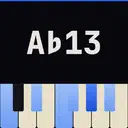
Write out the E♭ major scale, then cross off the E♭. What remains is F, G, A♭, B♭, C and D, and stacked from the B♭ those six notes are B♭13: root, major third, perfect fifth, minor seventh, ninth and thirteenth. A dominant that contains every note of the key it is heading for except the tonic itself is a fair description of what a V chord does. B♭13 is an arrival being prepared with almost everything in place and one note withheld.
Six notes is also more than either hand can hold, so the practical question about this chord is never how to build it but what to leave out.
Try It: B♭13 in the Chord Finder
Set the root to B♭, choose B♭ mixolydian and switch the Thirteenth toggle on. Then take the Ninth toggle off and back on, and hear how little the chord’s identity depends on that C.
The Notes of B♭13
| Degree | Note | Interval from root | Semitones |
|---|---|---|---|
| 1 (root) | B♭ | Perfect unison | 0 |
| 3 | D | Major 3rd | 4 |
| 5 | F | Perfect 5th | 7 |
| ♭7 | A♭ | Minor 7th | 10 |
| 9 | C | Major 9th | 14 |
| 13 | G | Major 13th | 21 |
Written out: B♭, D, F, A♭, C, G. The G is the same pitch class as a sixth above B♭, so the figure 13 says where the note belongs rather than how far away it is. Put that G under the A♭ rather than over it and the ear stops hearing a thirteenth.
How B♭13 Is Built
Take B♭9, which is B♭, D, F, A♭ and C, and add a G on top. There is no eleventh in between and there is not going to be: an eleventh above B♭ is E♭, a semitone above the chord’s own D, and the two cannot share a chord without the D losing. B♭11 is what happens when the third gives way instead.
The interesting rearrangement is upwards. Take the root off and D, F, A♭ and C is a D half diminished seventh, sitting complete on the chord’s own third. Put A♭ at the bottom instead and A♭, C, G, B♭, D, F reads as an A♭ major chord with a seventh, ninth, sharpened eleventh and thirteenth, the A♭ lydian sound in one grip. The same six notes are a dominant on B♭ and a shimmering major chord on A♭, and only the bass decides.
B♭13 on the Piano
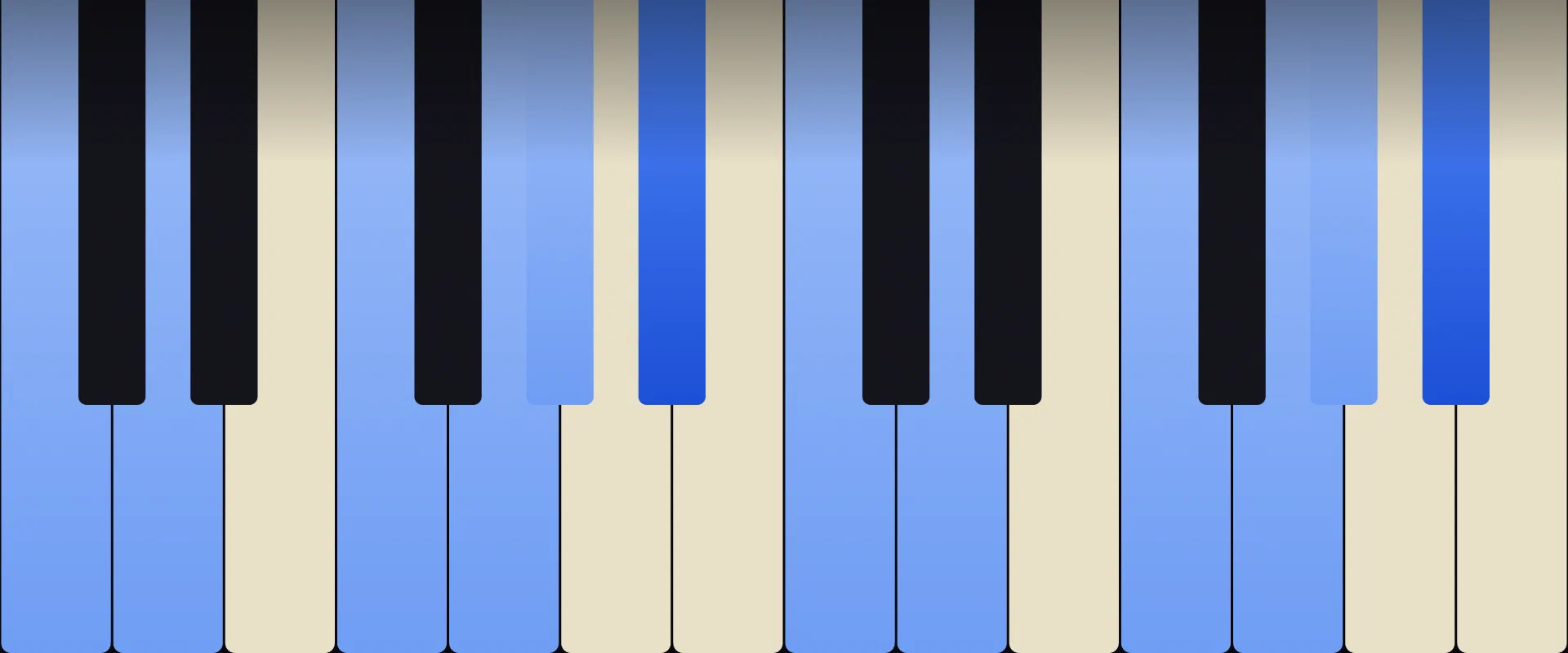
Only two of the six notes are black keys, B♭ and A♭, both flats landing where a keyboard player expects them. D, F, C and G are white, which makes this one of the easier thirteenth chords to find by feel.
Nobody plays all six. B♭ up to G is twenty one semitones, so give the root to the left hand and use one of the two standard rootless right hand shapes. The compact one is D, G, A♭ and C: third, thirteenth, seventh and ninth, spanning ten semitones under fingers 1, 2, 3 and 5. The G and A♭ rub against each other in the middle of the hand, and that semitone is the whole character of the chord. Voice them further apart and it goes bland.
The other shape starts from the seventh: A♭, C, D and G, spanning a major seventh, third and thirteenth on top. Three white keys and one black, thumb on the A♭. Alternate between the two so the top voice falls rather than leaps when the harmony moves.
Neither shape contains an F. The fifth is the first note to go from any large chord, and it goes unmissed, because the bass implies it and it says nothing the third and seventh are not saying more clearly.
B♭13 on the Guitar
Six strings, four usable fingers and one of them usually busy with a barre. Something has to give, and here it is the fifth and the ninth.
The sixth string form sits at the sixth fret: 6 x 6 7 8 x. That is B♭, A♭, D and G, four notes, and they are the four that matter: root, seventh, third, thirteenth. The fifth string is deadened by the fretting index and the top string left out. Anyone who has played an E13 shape knows the grip, and B♭ puts it in the middle of the neck, the most comfortable region the guitar has.
The fifth string form drops to the first fret: x 1 3 1 3 3 gives B♭, F, A♭, D and G, five of the six with only the ninth missing. It wants an index barre at the first fret, where string tension is highest and the neck offers least sympathy, with three fingers spread over the third fret. A real chord, and hard work.
Better news: two open strings, D and G, are chord tones here, the third and the thirteenth, which makes a near open voicing available that the chord books do not print. Play x 1 0 1 1 3, which sounds B♭, D, A♭, C and G: root, third, seventh, ninth and thirteenth, one each, with only the unwanted fifth missing. Middle finger on the fifth string, index across the third and second strings at the first fret, little finger on the top string at the third, and the open D rings between them. Easier than the barre above, and more of the chord.
Inversions
| Inversion | Notes | Bass | Symbol |
|---|---|---|---|
| Root position | B♭ D F A♭ C G | B♭ | B♭13 |
| 1st inversion | D F A♭ C G B♭ | D | B♭13/D |
| 2nd inversion | F A♭ C G B♭ D | F | B♭13/F |
| 3rd inversion | A♭ C G B♭ D F | A♭ | B♭13/A♭ |
| 4th inversion | C G B♭ D F A♭ | C | B♭13/C |
| 5th inversion | G B♭ D F A♭ C | G | B♭13/G |
With six notes in play these are descriptions, not instructions: a real voicing drops notes long before it reorders them. Two rows repay a look. The third inversion is the A♭ lydian chord described above, which is why arrangers so often put the seventh in the bass. The fifth inversion is a trap: G, B♭, D and F is a good G minor seventh, but the chord’s A♭ sits a semitone above that bass G, so the harmony leans on the bass note rather than resting on it. See Chord Inversions and Voice Leading.
Voicings
Put the G on top. It is the note the symbol is named for, and every other voice is already familiar from B♭7.
| Shape | Frets | Result |
|---|---|---|
| B♭13 | 6 x 6 7 8 x | Root, 7th, 3rd, 13th |
| B♭13 | x 1 3 1 3 3 | Five notes, no 9th, first fret barre |
| B♭13 | x 1 0 1 1 3 | Five notes, no 5th, two fretting shapes |
| B♭7 | x 1 3 1 3 x | The chord underneath, no 13th |
| B♭9 | x 1 0 1 1 x | The same near open grip without the G |
The last two rows differ from the ones above them by a single finger, which is how a comping guitarist varies four bars of one chord.
Which Keys Contain B♭13
- V of E♭ major
- IV of F dorian
- III of G phrygian
- II of A♭ lydian
- I of B♭ mixolydian
- VII of C natural minor
- IV of F melodic minor
Six of those seven rows are the same seven notes. F dorian, G phrygian, A♭ lydian, B♭ mixolydian and C natural minor are all the E♭ major scale started somewhere else, so a soloist who knows E♭ major knows what to play over every one of them.
F melodic minor is the odd one out and the useful one. It replaces the E♭ with an E natural, which this chord does not contain and therefore does not mind. Play it over B♭13 and that E arrives as a sharpened eleventh, the colour that turns a plain dominant into something a saxophone section would recognise.
Where B♭13 Shows Up
| Progression | Chords | Context |
|---|---|---|
| ii V I in E♭ major | Fm9, B♭13, E♭6 | The standard cadence in a horn key |
| B♭ blues, bar one | B♭13, E♭9, B♭13 | Tonic seventh with the top note added |
| Descending minor | Cm7, B♭13, A♭maj7 | i, then flat VII, then flat VI |
| Tritone substitute | Bm7♭5, B♭13, Am7 | Standing in for E7 into A minor |
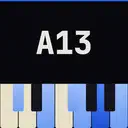
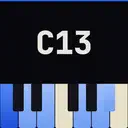
B♭ is a horn key, which is most of the reason this chord turns up here so much. Concert bands tune to concert B♭. The trumpet, clarinet, tenor and soprano saxophones are pitched in it and the alto and baritone saxophones in E♭, so big band charts live in concert B♭, E♭ and F. A trumpet part is written a whole tone higher, so it says C13 and reads C, E, G, B♭, D and A. An alto part is written a major sixth higher again, at G13, which is G, B, D, F, A and E, six naturals with not one accidental in them.
In a ii V I in E♭ the thirteenth is not decoration, it is the tonic’s own fifth arriving early: G is the fifth of E♭ major, so a top voice can hold it through the dominant and into the resolution while every other part moves.
The third row is this chord when it is not a dominant at all. In C minor, B♭ is the flattened seventh degree and every note here already lives inside C natural minor, so nothing is borrowed. Soul and gospel players walk down from Cm7 through B♭13 to A♭maj7 with none of it working as a cadence, and the G on top is the same G that was the fifth of the Cm7, so the line barely moves.
The last row is the substitution. B♭ and E are a tritone apart, and the two notes that give this chord its pull, D and A♭, are the pair that give E7 its pull with the names swapped. Play B♭13 where an E7 is written and it resolves into A minor happily, over a bass that walks down a semitone instead of leaping a fourth.
Related Chords
- B♭ Dominant 9th Chord, the five notes this adds a G to
- B♭ Dominant 11th Chord, where the third gives way instead
- B♭ Dominant 7th Chord, the shell that makes it a dominant
- B♭ Major 6th Chord, the same G with no seventh under it
- D Half Diminished Chord, the four notes stacked above the root
- Extended Chords and Jazz Harmony for which notes a thirteenth may drop
Learn More
Practice Chords
Drill chord recognition with a metronome, MIDI support, and score tracking.
Start Practicing