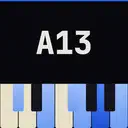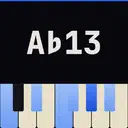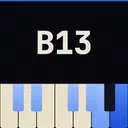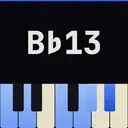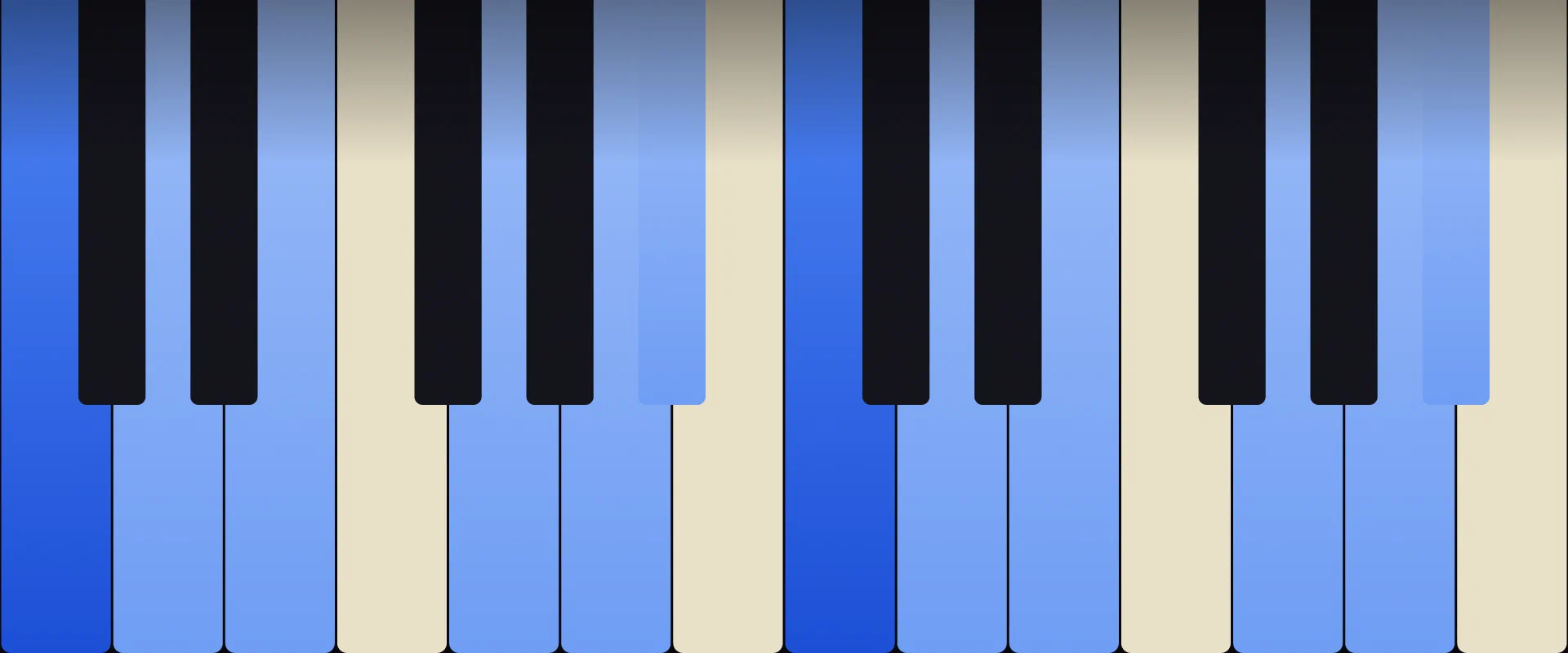
C13 is six notes: C, E, G, B♭, D and A. A guitar has six strings, a hand has five fingers, and almost nobody plays all six at once. A thirteenth chord is written as a stack and played as a selection, and the useful knowledge is which notes go and which never do.
Two of the six are the chord. E is the major third and B♭ the minor 7th, and the tritone between them is what makes anything called C13 a dominant. A is the reason for the symbol, so it stays too. That leaves G and D as the expendable pair, and G goes first, because the fifth adds nothing the rest of the chord has not said. Drop it and four notes remain, C, E, B♭ and A, which is what most printed C13 grips contain.
Try It: C13 in the Chord Finder
Set the root to C and switch the Thirteenth toggle on. Sound this chord, then the plain C7 beneath it, and listen for the one semitone the extension introduces: A rubbing against B♭. That friction is the character of the chord.
The Notes of C13
| Degree | Note | Interval from root | Semitones |
|---|---|---|---|
| 1 (root) | C | Perfect unison | 0 |
| 3 | E | Major 3rd | 4 |
| 5 | G | Perfect 5th | 7 |
| ♭7 | B♭ | Minor 7th | 10 |
| 9 | D | Major 9th | 14 |
| 13 | A | Major 13th | 21 |
Written out: C, E, G, B♭, D, A. There is no row for the 11th. F would sit a semitone above the E, and a full thirteenth chord keeps its third, so the 11th gives way here exactly as the third gives way in C11. Five of the six notes are white keys and B♭ is the only accidental, so nothing needs respelling.
A is the same pitch a C6 chord calls its sixth. The difference is underneath: C6 has no B♭ and so no tritone and nowhere to go, while C13 carries a minor 7th and every obligation that comes with one. Same top note, opposite function.
How C13 Is Built
Take C9, which is C, E, G, B♭ and D, and stack one more third on the D. That gives F, the 11th, which cannot stay next to the E. Stack one further third and you reach A, which can. So the thirteenth chord is the ninth chord with the eleventh stepped over and the thirteenth kept.
The internal structure is tidier than the stack suggests. The four notes above the root, E, G, B♭ and D, are an E half diminished 7th chord in root position, which is why Eø7 over a C is simply C9. Add the A on top and the chord is complete. The three notes it can most afford to rearrange, G, D and A, form a chain of perfect fifths, and voicing those as fourths rather than thirds is what gives a thirteenth chord its open big band sound. Extended Chords and Jazz Harmony takes the stack further.
C13 on the Piano
Nobody holds six notes in one hand, so the chord is a division of labour. The left hand takes C alone, low, and the right hand takes E, A, B♭ and D, a span of ten semitones under thumb, index, middle and little finger. It is the voicing jazz pianists learn first for any dominant thirteenth.
Look at what it leaves out and what it puts next to what. G is gone, which nobody notices. The remaining four are the third, the thirteenth, the seventh and the ninth, and putting A directly underneath B♭ places the chord’s only semitone in the middle of the hand where the ear catches it. Index on A and middle on B♭, one white key and one black, is the physical shape of that sound.
Reverse the pairs for the other standard form: B♭, D, E and A, seventh, ninth, third and thirteenth, spanning eleven semitones. It sits lower and gives the top of the chord to the thirteenth. Alternate between the two across a ii V I and neither hand travels more than a step, which is the point of learning both.
C13 on the Guitar
The standard grip is the one with the fewest notes in it. With the root on the sixth string at the 8th fret, 8 x 8 9 10 x sounds C, B♭, E and A: root, seventh, third, thirteenth, nothing else. The index barres the eighth across the sixth and fourth strings, the middle takes the third string at the ninth, the ring finger the second at the tenth. Four notes, and unmistakably a thirteenth chord. The same four sit under an A shape at the 3rd fret, x 3 x 3 5 5.
For a fuller version, start from the standard C9, x 3 2 3 3 x, and put the little finger on the first string at the 5th fret. The result, x 3 2 3 3 5, sounds C, E, B♭, D and A: five of the six notes, missing only the fifth. Index on the fourth string at the 2nd fret, middle on the fifth at the 3rd, ring finger flat across the third and second at the 3rd, little finger out on the 5th. It is the most complete C13 a guitarist can hold.
All six notes do exist in one position. At 8 10 8 9 10 10 the strings sound C, G, B♭, E, A and D, the chord entire, and getting there asks the ring and little fingers to cover three separate strings at the tenth. It is a diagram, not a chord.
Inversions
| Inversion | Notes | Bass | Symbol |
|---|---|---|---|
| Root position | C E G B♭ D A | C | C13 |
| 1st inversion | E G B♭ D A C | E | C13/E |
| 2nd inversion | G B♭ D A C E | G | C13/G |
| 3rd inversion | B♭ D A C E G | B♭ | C13/B♭ |
| 4th inversion | D A C E G B♭ | D | C13/D |
| 5th inversion | A C E G B♭ D | A | C13/A |
Six notes on six bass notes gives six readings, and most are not this chord any more. Over A the pitches read as an A minor 7th chord with a B♭ and a D piled on, which no arranger writes on purpose. Over B♭ they read as a B♭ major 7th chord carrying a ninth, a raised eleventh and a thirteenth with no fifth underneath them, a genuinely beautiful lydian sound and the reason this site lists C13 on the second degree of B♭ lydian.
The inversion that earns its place in real music is the first. With E in the bass the harmony still reads as C13, and E is a semitone below the F a bass line is heading for, so a walking bass reaches the tonic straight through it. See Chord Inversions and Voice Leading.
Voicings
| Shape | Frets | Result |
|---|---|---|
| C13 | 8 x 8 9 10 x | Root, ♭7, 3rd, 13th |
| C13 | x 3 x 3 5 5 | The same four, A shape |
| C13 | x 3 2 3 3 5 | Five notes, no 5th |
| C13 | 8 10 8 9 10 10 | All six, not playable |
| C9 | x 3 2 3 3 x | The chord it grows from |
| C7 | x 3 2 3 1 x | Root, 3rd and ♭7, no 5th |
Which Keys Contain C13
- V of F major
- I of C mixolydian
- IV of G dorian
- VII of D natural minor
- II of B♭ lydian
- IV of G melodic minor
The first five rows are the same seven notes from five starting points, so in practice there is one scale here and it is F major. Rooted on C that scale is C mixolydian, the only fit among the seven modes of the major scale: this chord wants a major third, a major sixth and a minor seventh at once, which is the definition of mixolydian. Ionian and lydian give the wrong seventh, dorian and aeolian the wrong third.
The last row is the interesting one. G melodic minor rooted on C is C lydian dominant, which matches the chord note for note and then offers F♯ where the ordinary scale offers F. The note the chord had to exclude returns as a raised eleventh, and C13♯11 is the result.
Where C13 Shows Up
| Progression | Chords | Context |
|---|---|---|
| ii V I in F major | Gm9, C13, Fmaj7 | A holds through all three |
| Jazz blues in C | C13, F13, C13, G13 | Every chord takes one |
| Turnaround in F | Fmaj7, Am7, Gm7, C13 | The last bar before the top |
Follow the A through the first row. It is the ninth of Gm9, the thirteenth of C13 and the third of Fmaj7, so a lead trumpet or a top piano voice holds that one note across the whole cadence while everything beneath it changes function. The harmony moves from subdominant to dominant to tonic and the melody never admits it. That is the sound of an ending that does not want attention, and it is why big band writers put thirteenth chords at cadences rather than plain sevenths.
The blues row is the practical one. In a jazz blues in C the tonic is not a major chord but a dominant, and thirteenth chords sit on every degree of the form without implying a key change. Play the four note grip at the 8th fret, slide it down to the 3rd for F13, and two positions cover a chorus. The friction between A and B♭ inside each chord does the work a blue note does in the melody.
The turnaround row is the chord heard without being noticed. C13 is a dominant that has already borrowed the tonic’s third, since A belongs to F major as firmly as it belongs here, so the cadence softens instead of sharpening. That suits a ballad, and a singer who has to breathe.
Related Chords
- C Dominant 11th Chord, the same family with the third given up instead
- C Dominant 9th Chord, this chord with the thirteenth taken off the top
- C Dominant 7th Chord, the tritone that every voicing here protects
- C Major 6th Chord, the same A with no seventh under it
- E Half Diminished Chord, the four notes standing directly above the root
- Extended Chords and Jazz Harmony for which tensions a dominant will take
Learn More
Practice Chords
Drill chord recognition with a metronome, MIDI support, and score tracking.
Start Practicing