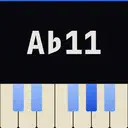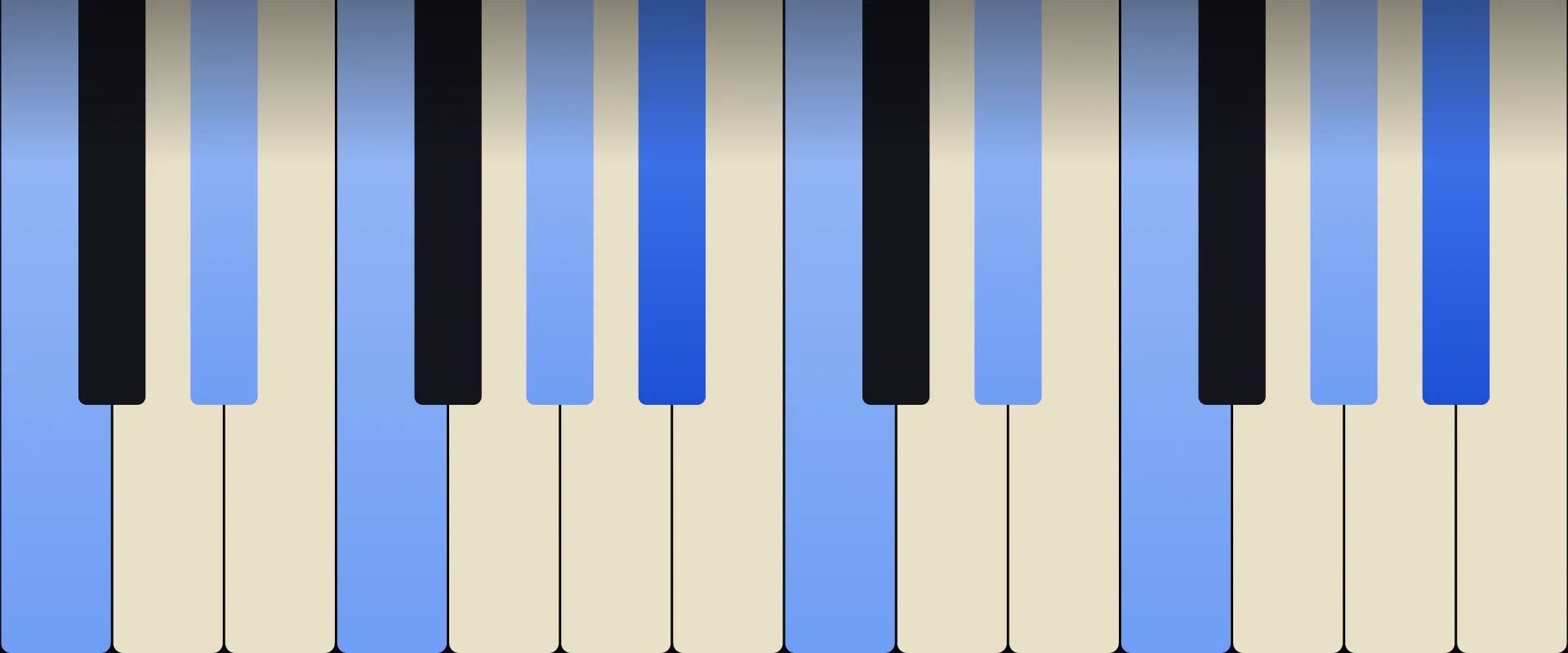
There is no D anywhere in this chord, and that is the point. B♭11 is B♭, F, A♭, C and E♭: root, fifth, minor seventh, ninth and eleventh, with the major third deliberately left out. An eleventh above B♭ is E♭, one semitone above D. Sound the two together and the chord stops being a colour and starts being an argument. Arrangers settled that argument long ago by dropping the third, which is why a chart is far likelier to say B♭7sus than B♭11 and mean these same five notes. What survives is a seventh chord with a fourth where its third should be and a ninth on top, and having no third turns out to be its most useful property.
Try It: B♭11 in the Chord Finder
Set the root to B♭ and choose B♭ dorian, then switch to B♭ mixolydian. The chord on the first degree does not change a note, because the only difference between those scales is the third and this chord has not got one.
The Notes of B♭11
| Degree | Note | Interval from root | Semitones |
|---|---|---|---|
| 1 (root) | B♭ | Perfect unison | 0 |
| 5 | F | Perfect 5th | 7 |
| ♭7 | A♭ | Minor 7th | 10 |
| 9 | C | Major 9th | 14 |
| 11 | E♭ | Perfect 11th | 17 |
Five rows, not six. The 14 and the 17 are placement instructions rather than interval names: C is a whole tone above the root and E♭ a perfect fourth above it, and both belong an octave higher than that.
How B♭11 Is Built
Start from B♭9, which is B♭, D, F, A♭ and C. Add an E♭ on top and take the D out. The removal is not an apology for a missing note, it is the definition of the chord.
From the other side it is simpler. B♭7sus4 is B♭, E♭, F and A♭. Put a C above it and B♭11 is complete, which is how a keyboard player builds it and why rhythm sections treat the two symbols as interchangeable.
Two rearrangements are worth memorising. Read the chord from its fifth and the top four notes, F, A♭, C and E♭, spell an F minor 7th in root position, so B♭11 is Fm7 with a B♭ underneath. Read it from the seventh and A♭, C, E♭, B♭ and F is an A♭6/9, the same five notes under a different name. Both readings are true at once, which is what a chord with no third is like. Suspended Chords: Sus2, Sus4, and the Art of Tension covers what a fourth does in place of a third.
B♭11 on the Piano
Three of the five notes are black keys, B♭, A♭ and E♭, and the white ones are F and C. That is kinder than it sounds: the hand sits well back on the keys rather than hunting between them, and every accidental lands where the eye expects it.
One hand will not hold the chord. B♭ up to E♭ is seventeen semitones with three notes standing inside. Give the B♭ to the left hand, or B♭ and F as a bare fifth, and the right hand is left with F, A♭, C and E♭. That is an F minor 7th in root position, a minor seventh wide, under fingers 1, 2, 3 and 5. Most players already own the shape from working in A♭ major or F minor, so learning B♭11 is mainly a matter of putting a familiar right hand over an unfamiliar bass.
A lighter version drops the F and plays the A♭ major triad over B♭ and F in the left hand. Gospel and pop players write that as A♭ over B♭, and the fifth in the bass keeps the root from sounding lonely under a chord that never confirms it with a third.
B♭11 on the Guitar
Not one of the six open strings is a note of this chord. The chord wants B♭, E♭, A♭, C and F, and E, A, D, G, B and E all miss, most of them by a semitone. There is genuinely no open form here.
What B♭ gets instead is the best movable eleventh shape on the instrument, at its lowest possible position. Lay the index finger flat across the first fret and play the top five strings: x 1 1 1 1 1. That is B♭, E♭, A♭, C and F, every note of the chord exactly once, root at the bottom, with one finger. It is the open A11 moved up a single fret.
The catch is where it sits. A barre at the first fret is the hardest on the neck, since string tension is highest beside the nut. One finger is still one finger, though, and the low E string at the first fret sounds F, the chord’s own fifth, so a full six string barre gives 1 1 1 1 1 1, still B♭11 but with F in the bass.
The sixth string form sits at the sixth fret: 6 8 6 8 6 8 sounds B♭, F, A♭, E♭, F and C, index barred at the sixth with three fingers on the fifth, third and first strings at the eighth. Drop the top string for 6 8 6 8 6 x and the C goes, turning it back into a plain B♭7sus4. In a band nobody misses the ninth.
Inversions
| Inversion | Notes | Bass | Symbol |
|---|---|---|---|
| Root position | B♭ F A♭ C E♭ | B♭ | B♭11 |
| 1st inversion | F A♭ C E♭ B♭ | F | B♭11/F |
| 2nd inversion | A♭ C E♭ B♭ F | A♭ | B♭11/A♭ |
| 3rd inversion | C E♭ B♭ F A♭ | C | B♭11/C |
| 4th inversion | E♭ B♭ F A♭ C | E♭ | B♭11/E♭ |
A chord with no third barely has inversions in the usual sense, because nothing in it can be contradicted by a new bass note. Every row above is a real chord under another name. Put F at the bottom and the notes read as an F minor eleventh without its ninth. Put A♭ at the bottom and they read as A♭6/9. Put C at the bottom and you have the whole F minor pentatonic scale sounding at once, since F, A♭, B♭, C and E♭ is that scale exactly. See Chord Inversions and Voice Leading.
Voicings
Keep the E♭ where a listener can hear it. Buried in the middle of the texture it just makes a slightly muddy B♭7.
| Shape | Frets | Result |
|---|---|---|
| B♭11 | x 1 1 1 1 1 | All five notes, one finger |
| B♭11/F | 1 1 1 1 1 1 | The same barre, F in the bass |
| B♭11 | 6 8 6 8 6 8 | Sixth string form, barre plus three |
| B♭7sus4 | 6 8 6 8 6 x | The same shape, ninth dropped |
| B♭7sus4 | x 1 3 1 4 x | Four notes near the nut |
| Fm7 | x 8 10 8 9 8 | The top four notes on their own |
Which Keys Contain B♭11
- V of E♭ major
- II of A♭ major
- VII of C natural minor
- I of B♭ mixolydian
- I of B♭ dorian
- I of B♭ natural minor
Look at the last three. The same chord is the tonic of a major flavoured mode, a minor flavoured mode and a full natural minor scale, and it bends to fit none of them. With no third of its own, there is nothing to clash with the scale’s, so B♭11 belongs to all three equally. That makes it the safest chord in the book for a rhythm section that has not yet agreed with the soloist.
The chord is also the whole of the F minor pentatonic scale, every note of it, which is the same set as the A♭ major pentatonic. Play that pentatonic as a block and you have played B♭11.
Where B♭11 Shows Up
| Progression | Chords | Context |
|---|---|---|
| ii V I in E♭ major | Fm7, B♭11, E♭maj7 | Bass moves, hands do not |
| Suspension and release | B♭11, B♭7, E♭6 | The E♭ drops to D |
| Modal vamp | B♭11 held over B♭ dorian or B♭ mixolydian | The soloist chooses the third |
| B♭ blues intro | B♭11 vamped, then B♭7 | Four bars before the head |
The first row is the reason this chord is worth knowing. Fm7 is F, A♭, C and E♭. B♭11 is those four notes with a B♭ added underneath, so a pianist comping a ii V in E♭ can hold the right hand dead still through the change and let the bass player do all of it. The harmony moves, the voicing does not.
Now why it happens in this key so often. B♭ is a horn key. Concert bands tune to concert B♭, the trumpet, clarinet, soprano and tenor saxophone are built in it, and big band charts default to concert B♭, E♭ and F as a result. A tenor player is not reading B♭11 at all: the part is written a tone higher and says C11, which is C, G, B♭, D and F. An alto reads a major sixth higher again, at G11, which is G, D, F, A and C, five naturals. What costs a pianist three black keys costs the saxophone section almost nothing.
The blues does the rest. B♭ is the default key for a jazz blues, the one called when nobody has specified, so the tonic of the most played form in the music is B♭7. Vamp its suspended version for four bars, let the E♭ fall to D as the head starts, and the tune has an introduction. Monk’s “Straight, No Chaser” and Parker’s “Now’s the Time” both sit on that tonic, and guitarists in that key have the one finger barre waiting for them, which is luck the instrument rarely gets in flat keys.
Related Chords
- B♭ Dominant 9th Chord, the chord this one extends and loses its third to
- B♭ Dominant 7th Chord, where the D comes back
- B♭ Sus4 Chord, the three note version of the same idea
- F Minor 7th Chord, what the top four notes spell on their own
- A♭ Major Chord, the triad that sits over the root in gospel voicings
- Extended Chords and Jazz Harmony for why the eleventh behaves this way
Learn More
Practice Chords
Drill chord recognition with a metronome, MIDI support, and score tracking.
Start Practicing