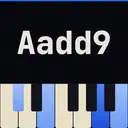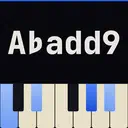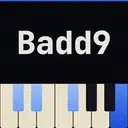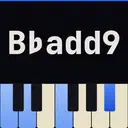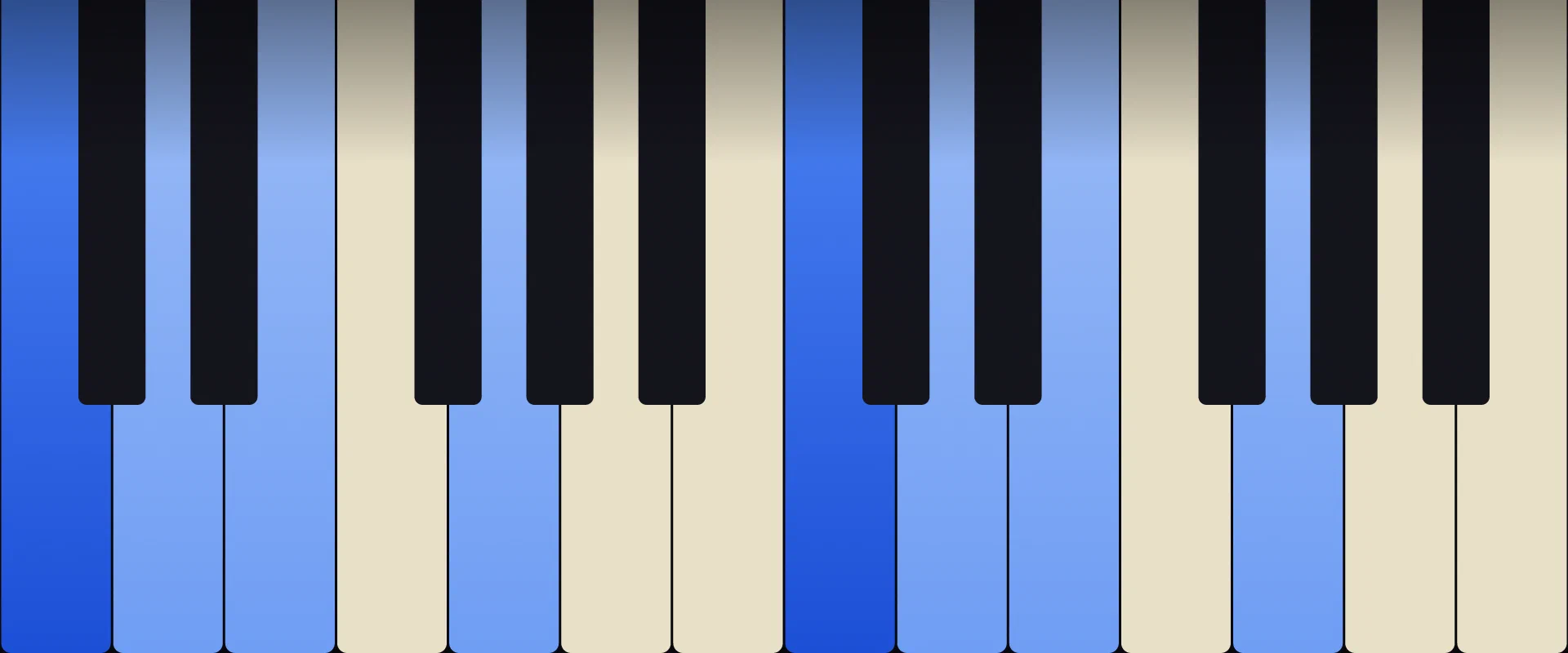
On the guitar this is a bigger chord than C major and an easier one, which almost never happens. Open C is x 3 2 0 1 0 and its hardest note is the index finger reaching back to the 1st fret. Cadd9 sends that finger home. Take the second string up from the 1st fret to the 3rd, x 3 2 0 3 0, and the whole first fret drops out of the chord.
The four notes are C, E, G and D. The major triad survives intact, and there is no seventh under the D, which is all the add prefix ever promises.
Try It: Cadd9 in the Chord Finder
Set the root to C and switch on the Ninth toggle. Cadd9 is what is left when you take the seventh back out.
The Notes of Cadd9
| Degree | Note | Interval from root | Semitones |
|---|---|---|---|
| 1 (root) | C | Perfect unison | 0 |
| 3 | E | Major 3rd | 4 |
| 5 | G | Perfect 5th | 7 |
| 9 | D | Major 9th | 14 |
Written out: C, E, G, D. Four white keys, no accidental anywhere, and nothing in the spelling to argue about. The 14 in the last row is a register instruction, not just an interval name.
How Cadd9 Is Built
Start with C, E and G, and drop a D on top an octave and a tone above the root. Nothing leaves, nothing moves, and the triad keeps its quality, so Cadd9 is still unambiguously a major chord and can end a piece the way plain C can.
Compare that with the other C chord containing a D. Csus2 is C, D and G: the D took the E’s job and the chord lost its 3rd along with its opinion. Cadd9 keeps both and stacks them a major 9th apart. Same added letter, opposite intention. The C Sus2 Chord page has the suspension side of it.
Put a B♭ underneath the D and it stops being an add chord at all: that is C9, a dominant with an obligation attached, and Extended Chords and Jazz Harmony sets out the add9 against 9 distinction in full.
Cadd9 on the Piano
Root position asks for a stretch: C up to D is 14 semitones, so thumb and little finger sit a 9th apart with the middle fingers filling in E and G. Playable for most adults, and worth doing once to feel how far away the D really is.
Then split it. Left hand takes C alone, right hand takes E, G and D with thumb, index and little finger. That spans a minor 7th and puts the D at the top where the ear wants it.
The interval to protect is not the obvious one. C against D is harmless once the D is up an octave. The pair to watch is D against E, because a hand that lets the D slip into the triad’s own octave produces C, D and E adjacent, and three white keys in a row is a cluster rather than a colour. Above the E the chord is bright; below it, a smudge.
That relationship is also the cleanest way to learn all three chords at once. D and E are neighbours on the keyboard. Plain C major takes the E, Csus2 takes the D instead, and Cadd9 refuses to choose and takes both, an octave apart. One pair of white keys accounts for the entire family.
Cadd9 on the Guitar
Look at what actually changes between x 3 2 0 1 0 and x 3 2 0 3 0. The open C sounds C, E, G, C and E; Cadd9 sounds C, E, G, D and E. One note differs, and it is the doubled root. The 9th takes over a string that was repeating information, so the chord gains a colour without losing a voice or gaining a finger.
The top of that shape is why players love it. The D sits on the second string at the 3rd fret and the open first string is an E, so the two highest voices are a whole tone apart, rubbing against each other above everything else. Low down a major 2nd is mud; up there it reads as shimmer, and it rings on long after the strum.
The second shape in common use, x 3 2 0 3 3, puts a G on the first string instead of that open E. The rub disappears, the chord widens, and it gains something better: the top three voices, G, D and G, are exactly the top three voices of the open G shape at 3 2 0 0 3 3. Move between those two chords and the ring and little fingers never leave the 3rd fret. Only the bass pair changes strings. Em7 at 0 2 0 0 3 3 holds the same three notes on top again, which is why that sequence of chords fingers itself.
The index finger is now unemployed, and it has one obvious job: the second string, 1st fret, is C. Hammer onto the 3rd fret and back and you have the Cadd9 decoration, one finger on one string, the rest of the chord ringing through it untouched.
Moving up the neck is less rewarding. The A shape at the 3rd fret gives x 3 5 7 5 3, a five fret span most players cut to x 3 5 7 5 x, sounding C, G, D and E. The E shape at the 8th fret, 8 10 12 9 8 8, needs a twelfth fret reach above the barre and almost nobody plays it. This is an open position chord and the neck offers no real substitute.
Inversions
| Inversion | Notes | Bass | Symbol |
|---|---|---|---|
| Root position | C E G D | C | Cadd9 |
| 1st inversion | E G D C | E | Cadd9/E |
| 2nd inversion | G D C E | G | Cadd9/G |
| 3rd inversion | D C E G | D | Cadd9/D |
Cadd9/E happens by accident on the guitar all the time: leave the sixth string ringing and the low E puts the third in the bass. On open C major that is a first inversion nobody asked for. Here it suits the chord, because the E underneath settles the argument about which octave the D belongs in.
The last row is worth a name. Read D, C, E, G from the D and you have a root, a ♭7, a 9th and an 11th, which is a D9sus4 missing only its A. Walk the bass down to D under a held Cadd9 and the harmony converts itself into a suspended dominant.
Voicings
Give the D room. Root, 5th, 9th, 3rd going upwards, C, G, D and E, is the arrangement both instruments reach independently: it is what the A shape produces at the 3rd fret and what a pianist plays when splitting the chord between two hands. Do not double the 9th.
| Shape | Frets | Result |
|---|---|---|
| Cadd9 | x 3 2 0 3 0 | Open, D and E ringing on top |
| Cadd9 | x 3 2 0 3 3 | Wider, anchors to open G |
| Cadd9 | x 3 5 7 5 x | Spread, movable |
| Cadd9/E | 0 3 2 0 3 0 | Third in the bass |
| C | x 3 2 0 1 0 | The chord it replaces |
Which Keys Contain Cadd9
- I of C major
- I of C lydian
- I of C mixolydian
- IV of G major
- V of F major
- Contained in C major pentatonic
The first three rows say something useful. Those scales differ only in their 4th and 7th degrees, F against F♯ and B against B♭, and Cadd9 contains neither. It is committed to major, because the E is there, and entirely uncommitted about which flavour of major, so it is the tonic chord of all three without adjustment.
The last row is the practical one. Every note of Cadd9 sits inside C major pentatonic, and the same four sit inside A minor pentatonic, the scale a guitarist is most likely to solo with over it.
Where Cadd9 Shows Up
| Progression | Chords | Context |
|---|---|---|
| I IV vi V (G major) | G, Cadd9, Em7, D | The anchored open shapes |
| Iadd9 V vi IV (C major) | Cadd9, G, Am, F | Pop loop with a ringing tonic |
| I Iadd9 I (C major) | C, Cadd9, C | One finger decorating a held chord |
| IV V I (F major) | B♭, Cadd9, F | A dominant with no tritone in it |
The first row is where most listeners have met the chord, and the reason is mechanical. Songwriters working in G on an acoustic guitar reach for x 3 2 0 3 3 because it holds the ringing top of the instrument still while the harmony changes underneath. The fourth chord of a key normally breaks that spell; this one does not.
The fourth row shows what the chord cannot do. As the V of F it has no B♭, so there is no tritone in it and no obligation to go anywhere. It leans towards F rather than pulling, and the D becomes the 6th of the chord it lands on. Country and hymn writing both use that softened dominant on purpose, because a cadence arriving without a shove suits a congregation and a pedal steel alike.
One arrangement habit follows from the note content rather than the shape. Because the D is doing the job a doubled root was doing, a second guitar or a keyboard can play the plain triad underneath at the same time without thickening anything.
Related Chords
- C Major Chord, one doubled note away on the guitar
- C Sus2 Chord, the same D used to evict the 3rd instead of joining it
- C Major 6th Chord, the other way of adding a note to C without a seventh
- C Dominant 7th Chord, what happens when the seventh does turn up
- Extended Chords and Jazz Harmony for add9 against 9, and for C6/9
- Guitar Chord Shapes: The CAGED System for the shapes behind the movable versions
Learn More
Practice Chords
Drill chord recognition with a metronome, MIDI support, and score tracking.
Start Practicing