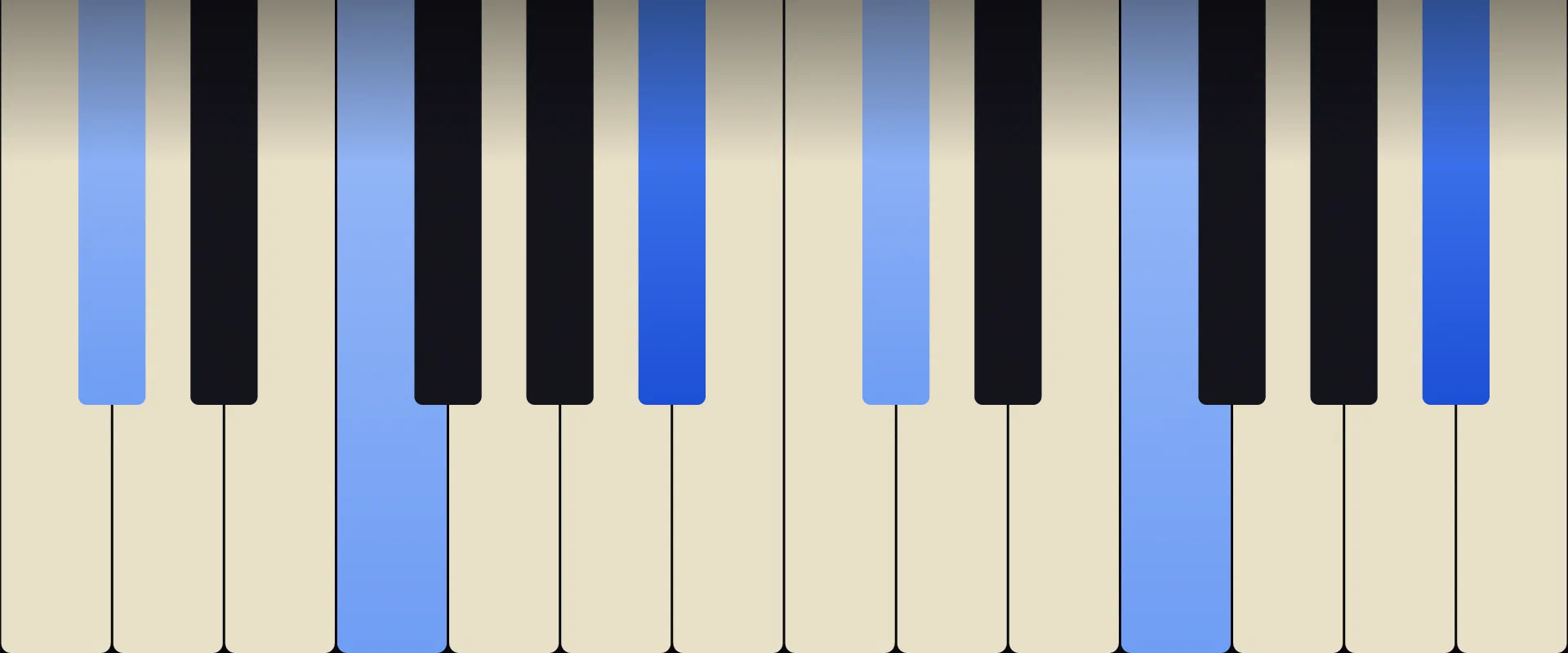
Five flats. That is the key signature B♭ minor carries, and it decides in advance who finds this chord comfortable. A pianist reading B♭, D♭ and F has two of the three notes on black keys, exactly where the hand wants them. A guitarist gets no open string at all and has to barre the 1st fret, the one position on the neck almost everybody avoids. Since B♭ minor is also a key a great many singers settle into naturally, the argument tends to start in rehearsal: the vocalist asks for it, the keyboard player shrugs, and the guitarist reaches for a capo.
Try It: B♭m in the Chord Finder
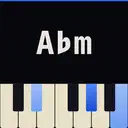
Select B♭ as the root and watch the two black keys light up next to a single white one.
The Notes of B♭m
B♭ minor is a three note triad: B♭, D♭ and F.
| Degree | Note | Interval from B♭ | Semitones |
|---|---|---|---|
| 1 (root) | B♭ | Perfect unison | 0 |
| ♭3 | D♭ | Minor 3rd | 3 |
| 5 | F | Perfect 5th | 7 |
The usual symbol is B♭m, written B♭min in some older piano editions.
How B♭m Is Built
Take B♭ major, which is B♭, D and F, and lower the D by one semitone to D♭. Nothing else moves. The outer interval from B♭ up to F stays a perfect 5th, so the chord keeps its stability and only changes its colour.
That semitone costs three flats in the key signature: B♭ major has two, B♭ minor has five. B♭ minor is the relative minor of D♭ major, sharing all seven notes and the same signature, so a piece moving between them never redraws an accidental. The sharp side spelling, A♯ minor, needs seven sharps and is almost never used.
B♭m on the Piano
Run through the twelve minor triads and B♭m is the only one built black, black, white from the bottom up. B minor is its mirror. Every other minor triad either sits entirely on white keys, wraps a white key between two black ones, or, like E♭ minor, uses black keys throughout. B♭m alone puts both accidentals underneath and leaves the plain key on top.
That layout is unusually kind to the right hand. Take 1 on B♭, 3 on D♭ and 5 on F. Thumb and third finger sit back among the raised keys, where they are naturally longer reaches, and the little finger drops forward onto F near the front edge. The hand slopes gently downwards from left to right, close to its resting shape, and the black keys give the fingers something to aim at instead of a wide flat surface they can drift along.
The left hand mirrors it, 5 on B♭, 3 on D♭, 1 on F, and takes more care. The thumb is the finger out on the white key, so it wants to creep forward and drag the hand with it. Keep the wrist level and let the little finger reach in.
Turn the chord over and first inversion, D♭ F B♭, gives black, white, black, the most comfortable grip on a keyboard: both outer fingers on raised keys, the middle finger in the valley between them. Gospel and ballad players use B♭m/D♭ far more often than the theory alone would suggest.
B♭m on the Guitar
There is no open form. Not a partial one, not an awkward one, none: B♭, D♭ and F cannot be produced by any combination of open strings and stopped notes, so every voicing of this chord is fretted from end to end.
The standard answer is the Am shape moved up to the 1st fret: index barred across the top five strings at fret 1, ring finger on the D string at fret 3, little finger on the G string at fret 3, middle finger on the B string at fret 2. It is a demanding grip in the worst possible place. Frets are widest beside the nut, so the reach from barre to fret 3 is the longest it will ever be, and the string is stiffest where it leaves the nut, so the barre needs real pressure before it stops buzzing.
Two ways out are worth knowing. The Em shape barred at the 6th fret puts the root on the sixth string, in the middle of the neck where the barre behaves. Or drop the barre and play just the top three strings: ring finger on the G string at fret 3, middle on the B string at fret 2, index on the high E string at fret 1. Three fingers, three notes, B♭, D♭ and F in that order, and it sits neatly under a vocal.
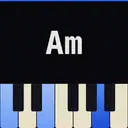
The third option is the one most working guitarists choose. B♭ minor is one semitone above A minor, so a capo at the 1st fret turns every A minor shape into a B♭ minor shape. Handed a chart in this key, the capo is not a compromise, it is the answer.
Inversions
| Inversion | Notes | Bass note | Symbol |
|---|---|---|---|
| Root position | B♭ D♭ F | B♭ | B♭m |
| 1st inversion | D♭ F B♭ | D♭ | B♭m/D♭ |
| 2nd inversion | F B♭ D♭ | F | B♭m/F |
B♭m/D♭ is the useful one. In D♭ major, where B♭m is the vi chord, keeping D♭ in the bass leaves the tonic note in place while the harmony changes above it, so D♭ to B♭m/D♭ becomes a change of colour rather than a change of chord.
B♭m/F leans the other way. With the 5th underneath the chord wants to move, which makes it a stepping stone when the bass walks F, G♭, A♭ up to B♭. See Chord Inversions and Voice Leading for how those choices behave across a phrase.
Voicings
Close position, all three notes inside one octave, is compact and slightly dark, and it sits in a region of the keyboard that is easy to keep quiet. That is part of why B♭m works so well under a singer.
Spread it out and it opens considerably: B♭ low in the left hand, F a fifth above, D♭ on top. The minor 3rd carries the mood, so giving D♭ the top voice puts the colour where the ear will find it.
For jazz, leave the root to the bass and voice B♭m7 as D♭, F and A♭ in the left hand with the 9th, C, above. That is a stock ballad sound and the starting point for the harmony in Seventh Chords: The Complete Guide.
Which Keys Contain B♭m
- i of B♭ natural minor
- i of B♭ harmonic minor
- vi of D♭ major
- ii of A♭ major
- iv of F natural minor
- v of E♭ natural minor
Where B♭m Shows Up
As the ii chord of A♭ major, B♭m opens the most recorded cadence in jazz:
B♭m7 | E♭7 | A♭maj7
A♭ major is a keyboard and horn key rather than a guitar key, and this turnaround is where B♭ minor earns most of its playing time. Tenor players read it as C minor, alto and baritone players as G minor, so the whole section gets a readable signature.
As the vi of D♭ major it does gospel and soul work:
D♭ | B♭m | G♭ | A♭
Those four chords carry an enormous number of ballads, and the reason they are in D♭ rather than D is usually the singer. B♭ minor sits in the middle of a lot of voices, and a semitone either way pushes the top note out of reach.
Inside its own key, the standard descent borrows from the harmonic minor:
B♭m | A♭ | G♭ | F7
That F7, with its A natural, supplies a leading note that pulls back to B♭. Swap it for Fm and the phrase stops driving and starts drifting.
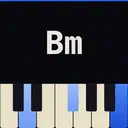
None of these are guitar keys. B♭ minor sits one fret above A minor and one below B minor, both of them easy, so a singer who wants the key in between hands the guitarist the one root with nothing open in it. See How to Transpose a Song to Any Key for working out where a capo actually gets you.
Related Chords
- B♭ Major Chord, the same triad with D natural in place of D♭.
- Minor Scales: Natural, Harmonic and Melodic, the source of that F7.
- Guitar Chord Shapes and the CAGED System, on why the Am shape lands at fret 1 for this root.
- Extended Chords and Jazz Harmony, which takes B♭m7 out to the 9th and 11th.
Learn More
Practice Chords
Drill chord recognition with a metronome, MIDI support, and score tracking.
Start Practicing