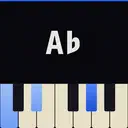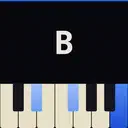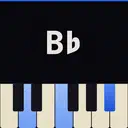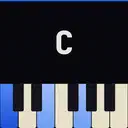
Three fingers, one fret, three neighbouring strings. That is the entire difficulty of A major on a guitar, and it is why this chord has produced more rival fingerings than any other open shape. The notes themselves are unremarkable (A, C♯ and E) and a pianist picks them up without comment. Guitarists argue about them for years, because the open form x 0 2 2 2 0 asks you to park three fingertips side by side in roughly 15 mm of space, hemmed in by an open string on either side that has to keep ringing.
Try It: A in the Chord Finder
Select A as the root, then play the chord on the keyboard below and hear how the three notes sit together.
The Notes of A
| Degree | Note | Interval from Root | Semitones |
|---|---|---|---|
| 1 (Root) | A | Perfect unison | 0 |
| 3 | C♯ | Major 3rd | 4 |
| 5 | E | Perfect 5th | 7 |
One accidental, C♯, and it lands where you would expect it to: on a black key. The key of A major carries three sharps (F♯, C♯ and G♯), but the triad only needs one of them, so a reader coming from the key signature should not go hunting for the other two.
The root deserves a footnote of its own. A above middle C is the reference pitch of the modern tuning system, fixed at 440 Hz by ISO 16, and it is the note an oboe gives an orchestra before a concert (many European orchestras run slightly sharp, at 442 or 443 Hz). A guitar’s open fifth string is the same pitch class two octaves down, at 110 Hz, which is the bass note of the open chord discussed below.
How A Is Built
Stack a major 3rd on A and you get C♯. Add a minor 3rd on top of that and you get E. The outer interval, A up to E, is a perfect 5th.
The nearest simpler chord is A5, just A and E with no third at all, which on a guitar is the open shape with two fingers taken away. Drop the C♯ by a semitone to C and you have A minor. That single note is the whole argument, and its position on the guitar turns out to matter a great deal.
A on the Piano
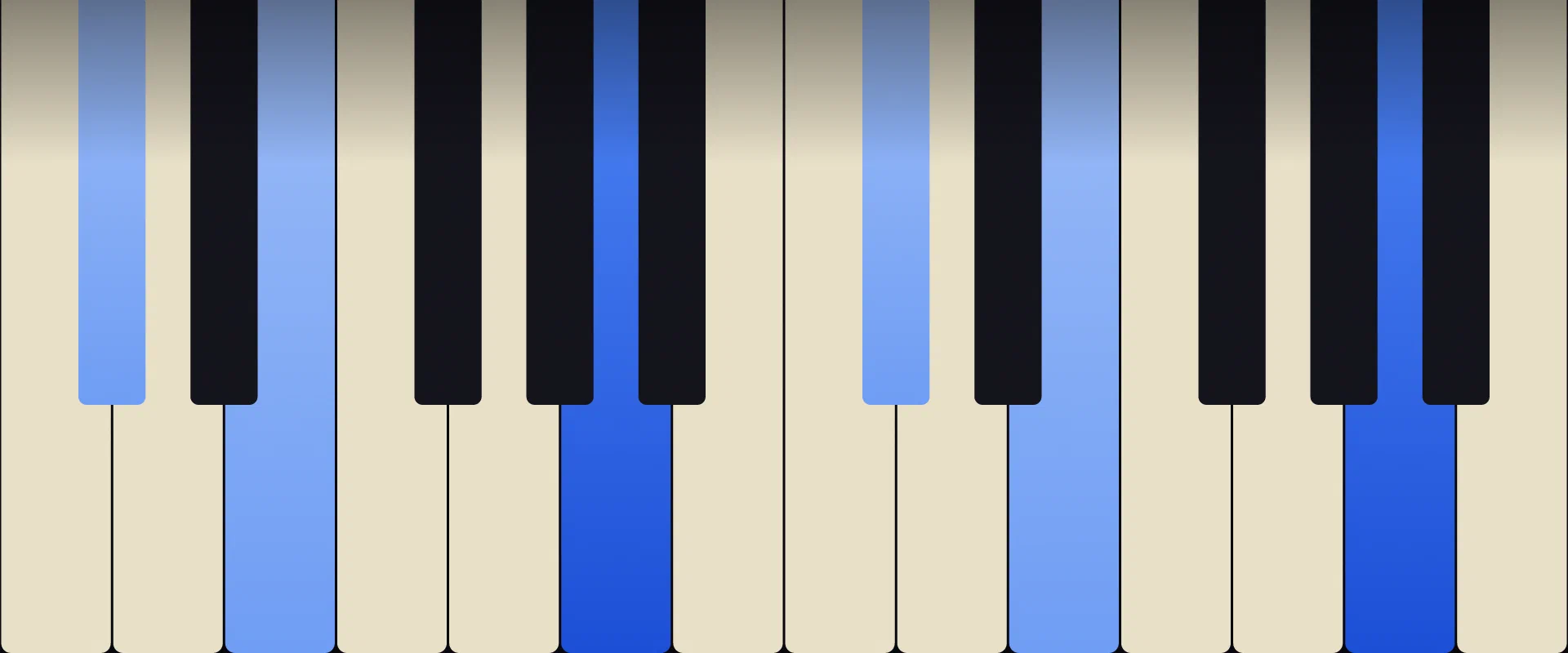
The keyboard is generous here. A and E are white keys, C♯ is black, and the black note is the middle one, which is exactly where a hand wants a black note to be. Right hand 1 to 3 to 5 puts the thumb on A near the front edge of the key, the middle finger (the longest one) back on the raised C♯, and the little finger out front again on E. The hand adopts its natural resting arch without being asked. Left hand 5 to 3 to 1 mirrors it just as comfortably.
Because nothing is awkward, the trap is register rather than fingering. A major third sitting low turns to mud, and A2 up to C♯3 is already in that zone. Spread the chord instead: A2 alone in the left hand, C♯4 and E4 in the right, or leave the third out of the bass entirely.
For arpeggios, right hand 1, 2, 3 rising with the thumb tucking under after C♯ keeps the thumb off the black key, which is the habit worth building early.
A on the Guitar
String spacing narrows towards the nut. At the 2nd fret, adjacent strings sit around 7 mm apart on a typical acoustic, so the D, G and B strings together span about 15 mm. Three adult fingertips laid side by side are wider than that. This is not a technique problem you can practise away, it is an anatomy problem, and it is why four distinct solutions are in circulation.
Two things make the crowding worse than it looks. The fifth string must ring open, so no finger may lean back onto it, and the first string must ring open too, so no finger may flatten forward onto it. The chord is boxed in on both sides. Worse, the C♯ lives on the B string, at the treble edge of the block. It is the only third in the voicing (x 0 2 2 2 0 gives you two A’s, two E’s and one C♯), so the note most likely to be choked by a neighbouring finger is precisely the note that decides whether the chord is major or minor.
| Fingering | What it buys | What it costs |
|---|---|---|
| Index, middle, ring on strings 4, 3, 2 | A separate fingertip per string, so each note is pressed at its own point and sustains cleanly. This is what most method books teach. | The most crowded of the four. The index arrives at an angle from below and tends to push the ring finger flat onto the open first string. No finger is left over. |
| One finger laid flat across strings 4, 3, 2 | No crowding at all, and one movement instead of three, which survives fast strumming and quick changes. | Pressure is uneven along a flat finger, so one string usually buzzes until you find the spot. The joint has to arch enough to clear the open first string. A ring-finger barre arches more easily than an index barre and leaves the index free. |
| Index flat across strings 4 and 3, ring finger on string 2 | The best compromise for small hands. One finger rolls slightly onto its side for the two easy notes, and a proper fingertip lands on the C♯. | Two different hand shapes to coordinate at once, and the flattened index still has to clear the first string. |
| Middle, ring, little on strings 4, 3, 2 | The index stays free. Lift the little finger and drop the index onto the 1st fret of the B string and you are in A minor, already using its standard fingering. | The little finger is the weakest, so the C♯ becomes the note most likely to be fretted softly. It needs the most practice before it is reliable. |
Which one to use depends on what happens next. Strumming a folk song that alternates between A and D, take the index, middle, ring version and enjoy the clean attack. If the song swaps between A and A minor, or between A and Asus4, the middle, ring, little version pays for itself within a bar. For small hands or high tempos the two-finger roll is the honest answer, and a one-finger barre is the right call for a rhythm part where speed matters more than full sustain.
The x still needs handling. Most players hook the thumb over the neck to deaden the sixth string, which also stabilises the hand and relieves the crowded fingers.
Away from the nut, A major is the E shape barred at the 5th fret, 5 7 7 6 5 5. That position is comfortable ground: the frets are still wide, the string tension is lower than at the 1st fret, and the shape moves. The open form is also the CAGED A shape in its home position, which makes it the template for every barre chord built on the fifth string.
Inversions
| Inversion | Notes | Bass note | Symbol |
|---|---|---|---|
| Root position | A C♯ E | A | A |
| 1st inversion | C♯ E A | C♯ | A/C♯ |
| 2nd inversion | E A C♯ | E | A/E |
The second inversion is free on a guitar. Stop muting the sixth string, play 0 0 2 2 2 0, and the open low E becomes the bass. It is a softer, less grounded version of the chord, useful under a melody that has not arrived home yet.
The first inversion takes one extra finger. Fret the fifth string at the 4th fret to get C♯ in the bass, x 4 2 2 2 0, and you have the chord that carries the descending line in countless folk arrangements.
Voicings
| Voicing | How to play it |
|---|---|
| Open A | x 0 2 2 2 0, the standard folk and rock shape |
| A5 | x 0 2 x x x, root and 5th only, no third |
| Barre at the 5th fret | 5 7 7 6 5 5, E shape moved up |
| A/C♯ | x 4 2 2 2 0, first inversion for a bass line |
| A/E | 0 0 2 2 2 0, open low E in the bass |
| Piano, spread | A2 in the left hand, C♯4 and E4 in the right |
Asus2 (x 0 2 2 0 0) and Asus4 (x 0 2 2 3 0) sit one finger away from the open shape, which is why the ornament of lifting or adding a finger over a held A chord is so deeply worn into guitar playing.
Which Keys Contain A
- I of A major
- IV of E major
- V of D major
- III of F♯ natural minor
- VI of C♯ natural minor
- VII of B natural minor
Where A Shows Up
| Progression | In this key | Chords |
|---|---|---|
| I, IV, V | A major | A, D, E |
| I, vi, IV, V | A major | A, F♯m, D, E |
| I, IV, V (twelve bar blues) | E major | E, A, B7 |
| I, V, vi, IV | D major | D, A, Bm, G |
Guitar music leans on A major heavily because all three chords of a I, IV, V in A (A, D and E) are open shapes with open bass strings, so a song in this key rings more than the same song a semitone either side. The same logic runs through the blues. E is the most-played blues key on the instrument, and A is its IV chord, the one the progression moves to in bar five. A harmonica player joining an A blues in cross harp reaches for a D harmonica.
Bowed strings tell the same story from the other direction. A violin is tuned G, D, A, E, a viola and cello C, G, D, A, and a double bass E, A, D, G, so every one of them has an open A. Playing in A major sets those strings vibrating sympathetically, and the key sounds brighter and louder for no extra effort from the player. It is one reason the sharp keys dominate string writing, and one reason Mozart put his fifth violin concerto, K. 219, in A major.
Fiddle-led traditions follow suit. Old-time and bluegrass players default to A and D far more often than a pianist would, so singers often end up in a key chosen by the fiddle rather than by their own range. A capo at the 2nd fret, turning a G shape into an A, reconciles the two demands.
Related Chords
- Suspended Chords: Sus2, Sus4 and Tension
- Guitar Chord Shapes: The CAGED System
- Chord Inversions and Voice Leading
- Chord Progressions Every Musician Should Know
Learn More
Practice Chords
Drill chord recognition with a metronome, MIDI support, and score tracking.
Start Practicing