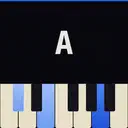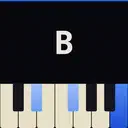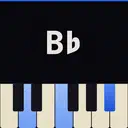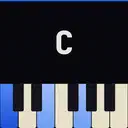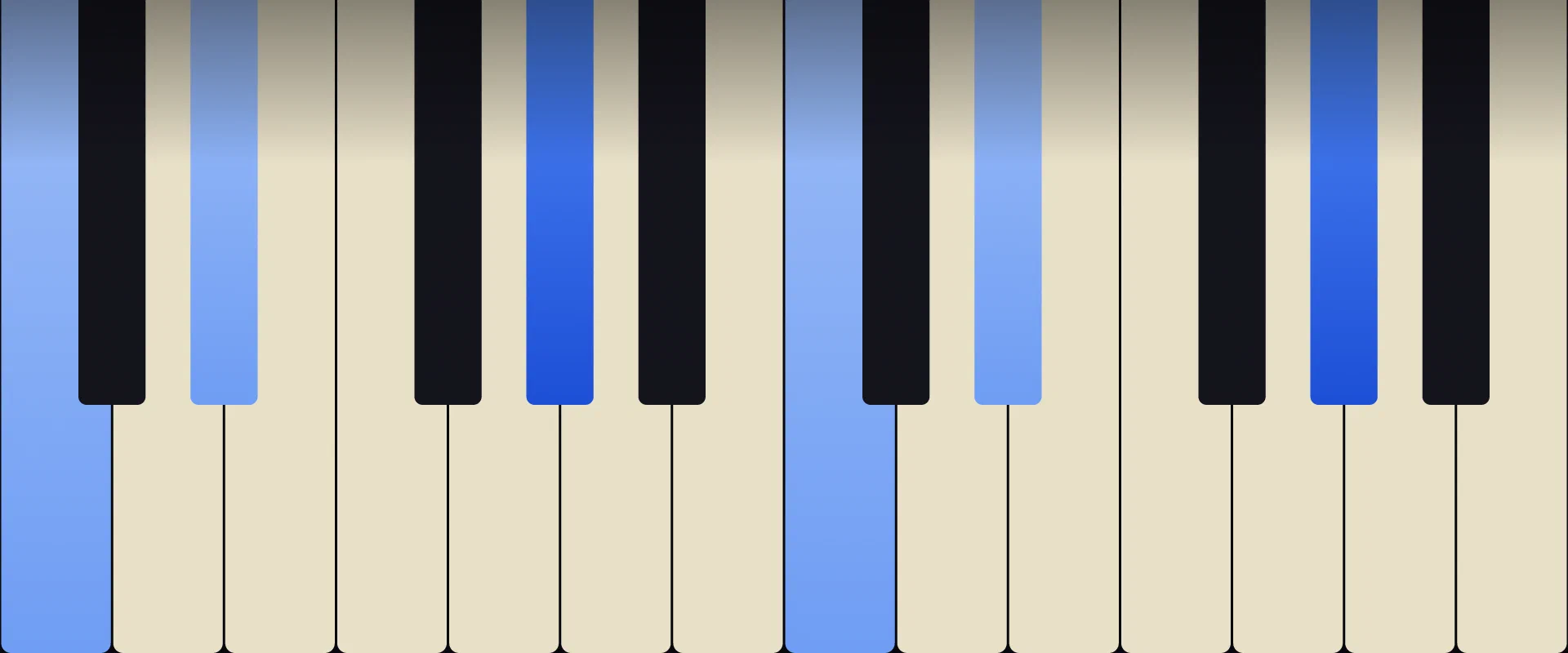
A♭ major is where a band argues. Singers ask for it because it drops a melody into the part of the voice that has weight without strain, horn players are glad of it because their parts come out in one or two flats, and the pianist has no complaint at all. The guitarist has to decide whether to barre it, capo for it, or retune the instrument. That tension is why the chord is everywhere in soul, gospel, big band and the Great American Songbook, and almost absent from music written by someone holding a guitar.
Try It: A♭ in the Chord Finder
The Notes of A♭
Three notes, two of them black keys:
| Degree | Note | Interval from root |
|---|---|---|
| 1 | A♭ | Perfect unison |
| 3 | C | Major 3rd, 4 semitones |
| 5 | E♭ | Perfect 5th, 7 semitones |
Written low to high in root position: A♭ C E♭.
How A♭ Is Built
Start with the bare fifth, A♭ and E♭, and the chord has no mood yet. C in the middle makes it major. Flatten that C and you get A♭ minor, whose middle note has to be spelled C♭, an accidental that lands on the B key and confuses everybody who is reading rather than listening. A♭ major is the version of this chord that behaves on the page.
The spelling also explains a chord symbol you will never meet. The same three pitches could be called G♯ major, but that spelling needs B♯ for the third and D♯ for the fifth, so even in sharp-heavy music the chord is written A♭. There is no practical enharmonic choice here, which is unusual.
A♭ on the Piano
The hand likes this chord. A♭ and E♭ are black keys, C is the only white one, and the two black keys sit either side of it, so the fingers land in a natural cradle with the palm carried forward towards the fallboard rather than flat and back over the white keys. Right hand root position is 1 on A♭, 3 on C, 5 on E♭. Left hand is 5 on A♭, 3 on C, 1 on E♭. Both thumbs sit on a black key in that position, which sounds awkward described and is not, because the whole hand is already forward.
Turn it over and it gets better still. First inversion, C E♭ A♭, puts the thumb on C, the one white note, which is exactly where a thumb wants to be, with the second and fifth fingers reaching to the two black keys above. That is the most comfortable A♭ voicing on the instrument and the reason players who arrange in this key gravitate to first inversion in the right hand.
The comfort carries into the scale around the chord. In A♭ major the right hand thumb only ever falls on C and F, the white notes, and the long fingers do all the black key work. Chopin used this as his argument for teaching beginners flat keys before C major.
A♭ on the Guitar
Nothing about A♭ suits the instrument. There is no open form, no open string in the chord, and the root sits at the 4th fret of the low E string, in the middle of nowhere. The honest barre is the E shape at the 4th fret, fingered 4 6 6 5 4 4, and it is playable, easier than F at the 1st fret because the string tension has dropped, but it gives you six stopped notes and no ring. The A shape barre at the 11th fret is thin and cramped by comparison.
So guitarists in soul and gospel bands mostly capo, and the choice is between two positions.
Capo at the 1st fret, playing G shapes. The G shape sounds A♭, and everything else in the key comes with it: C shape for D♭, D shape for E♭, Em shape for Fm, Am shape for B♭m. Four of the key’s common chords become open shapes, and a capo one fret up shortens the string so little that the guitar still sounds like a guitar. This is the default, and it is the right default.
Capo at the 4th fret, playing E shapes. The E shape now sounds A♭, with an A shape for D♭ and a B7 for the dominant. Fewer open shapes, and the capo has taken a minor third off the bottom of the instrument, leaving only eight frets before the 12th. Players choose it anyway when a piano already owns the low midrange, and in A♭ a piano usually does. Capo 4 lifts the guitar clear of the left hand and the bass, which is an arranging decision rather than a fingering one.
There is a third route that changes the question. Tune the whole guitar down a semitone to E♭ and the open A shape sounds A♭, the D shape sounds D♭, the E shape sounds E♭. The entire rock vocabulary of the key of A now produces the key of A♭, with real open strings and no capo. This is a large part of why so many blues rock bands live in E♭ tuning and end up writing in flat keys without ever deciding to.
Inversions
| Inversion | Notes low to high | Bass note |
|---|---|---|
| Root position | A♭ C E♭ | A♭ |
| 1st inversion | C E♭ A♭ | C |
| 2nd inversion | E♭ A♭ C | E♭ |
First inversion, with C in the bass, is the one to learn first here. It is the easiest to play, and it is also the shape you need when A♭ moves to D♭, because C rises a semitone to D♭ while the other two voices barely move.
Voicings
A pianist comping in this key rarely plays all three notes in one fist. Left hand takes A♭ and E♭ as a shell, right hand takes C E♭ A♭, and the chord is wide, open and out of the way of a singer.
Drop the fifth and you are left with A♭ and C, which is enough to state the chord over a bass line. Adding the 7th gives A♭maj7 (A♭ C E♭ G) for the tonic sound, or A♭7 (A♭ C E♭ G♭) when the chord is being used as a dominant, which in flat keys it very often is.
On guitar the useful reduction is the A♭5 power chord, 4 6 6 on the bottom three strings, plus the top two strings of the E shape barre, fret 4 on the B and high E strings, giving E♭ and A♭ with a bright edge and no barre to hold.
Which Keys Contain A♭
- I of A♭ major
- IV of E♭ major
- V of D♭ major
- III of F natural minor
- VI of C natural minor
- VII of B♭ natural minor
Where A♭ Shows Up
The transposing instruments explain most of it. Concert A♭ arrives on a trumpet or tenor saxophone as B♭ major, two flats, and on an alto or baritone saxophone as F major, one flat. Both are comfortable reading keys, so arrangers writing for a horn section reach for A♭ constantly. Violinists, who prefer sharps and open strings, find four flats miserable, which is roughly why A♭ dominates big band and gospel charts and stays out of orchestral pop.
Three progressions worth having under the fingers:
| Progression | In A♭ | Where it lives |
|---|---|---|
| I, I7, IV, iv, I | A♭, A♭7, D♭, D♭m, A♭ | Gospel and soul turnaround |
| ii7, V7, Imaj7 | B♭m7, E♭7, A♭maj7 | Standards, the default jazz cadence |
| VI, VII, i | A♭, B♭, Cm | A♭ borrowed into C minor |
The first is the one that makes the key sound like itself. A♭ becomes A♭7 by dropping G to G♭, pulls to D♭, and D♭ then darkens to D♭m before falling home. It is a keyboard player’s move, and every note of it lies under the hand.
The third is worth noticing because it is how most guitarists actually meet this chord. Nobody in a rock band chooses the key of A♭, but plenty of songs sit in C minor, and the VI chord there is A♭. The same chord turns up as VII in B♭ minor. In both cases it arrives as a borrowed colour rather than a home base, which is why a guitarist can know the E shape at the 4th fret perfectly well and still have never played a song in A♭ major.
Related Chords
- Guitar Chord Shapes: The CAGED System for how the E shape and A shape move up the neck
- Suspended Chords: sus2 and sus4 for A♭sus4 (A♭ D♭ E♭) and A♭sus2 (A♭ B♭ E♭)
- Secondary Dominants and Borrowed Chords for A♭ used as a borrowed VI or VII
- A♭ Major Scale and A♭ Major Pentatonic
Learn More
Practice Chords
Drill chord recognition with a metronome, MIDI support, and score tracking.
Start Practicing