G Dorian Scale: Notes, Chords, and How to Play It
G Dorian is built on the 2nd degree of F major, with just one flat (B♭). It is one of the most popular Dorian keys in blues, jazz, and R&B — the single flat keeps it approachable while the Dorian colour adds sophistication to minor grooves. Many classic soul and funk tracks sit in G Dorian, taking advantage of the bright E natural that lifts the minor tonality.
What Makes Dorian Different?
The Dorian mode is built on the 2nd degree of a major scale. G Dorian uses the notes of F major starting and ending on G. Compared to G natural minor (G Aeolian), the only difference is the raised 6th degree — E natural instead of E♭. That single note lifts the mood from dark minor to something warmer and more expressive.
For a full explanation of all seven modes, see Modes Explained: Dorian to Locrian.
Notes of the G Dorian Scale
The G Dorian scale contains seven notes:
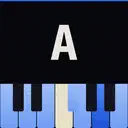
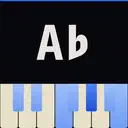
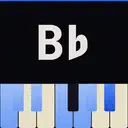
G – A – B♭ – C – D – E – F
The scale follows the Dorian interval pattern — W – H – W – W – W – H – W — and returns to G one octave higher.
| Degree | Note | Interval from Root | Step to Next |
|---|---|---|---|
| 1 (Root) | G | Unison | Whole step |
| 2 | A | Major 2nd | Half step |
| 3 | B♭ | Minor 3rd | Whole step |
| 4 | C | Perfect 4th | Whole step |
| 5 | D | Perfect 5th | Whole step |
| 6 | E | Major 6th | Half step |
| 7 | F | Minor 7th | Whole step |
| 8 | G | Octave | — |
The half steps fall between A–B♭ (degrees 2–3) and E–F (degrees 6–7). The major 6th (E natural) is the defining characteristic — it is what separates Dorian from natural minor and gives the mode its distinctive warmth in a minor context.
G Dorian on Piano
G Dorian has just one black key (B♭), making it one of the most accessible Dorian modes on the piano. The fingering is comfortable and the single flat is easy to remember.
Right hand fingering (ascending): 1 – 2 – 3 – 1 – 2 – 3 – 4 – 5 (thumb crosses under after B♭, then fingers walk up to G)
Left hand fingering (ascending): 5 – 4 – 3 – 2 – 1 – 3 – 2 – 1 (after the thumb plays D, the third finger crosses over to E)
Drone a low G with your left hand while playing the scale with your right to lock in the Dorian sound and keep G as the tonal centre.
G Dorian on Guitar
On guitar, G Dorian works well in the 3rd position (starting from G on the 6th string, 3rd fret) or the open position using the open G string as a drone.
3rd position (low to high):
| String | Fret | Note |
|---|---|---|
| 6th (E) | 3 | G |
| 6th (E) | 5 | A |
| 5th (A) | 1 | B♭ |
| 5th (A) | 3 | C |
| 5th (A) | 5 | D |
| 4th (D) | 2 | E |
| 4th (D) | 3 | F |
| 4th (D) | 5 | G |
This covers one octave from G on the 6th string to G on the 4th string. The 3rd-position pattern is very comfortable and commonly used in blues and jazz soloing.
Use the guitar fretboard view in the Interactive Chord Finder to see all positions at once.
Diatonic Chords in G Dorian
Stacking thirds on each scale degree produces seven triads:
| Degree | Chord | Quality | Notes |
|---|---|---|---|
| i | Gm | Minor | G – B♭ – D |
| ii | Am | Minor | A – C – E |
| III | B♭ | Major | B♭ – D – F |
| IV | C | Major | C – E – G |
| v | Dm | Minor | D – F – A |
| vi° | Edim | Diminished | E – G – B♭ |
| VII | F | Major | F – A – C |
The IV chord (C major) is the signature Dorian chord — a major chord built on the 4th degree in a minor context. In G natural minor the IV chord would be Cm; the C major here creates the distinctively bright Dorian colour.
For a thorough explanation of how diatonic chords are constructed, see Diatonic Chords: A Beginner’s Guide.
Seventh Chords
Adding a fourth note to each triad creates seventh chords:
| Degree | Chord | Quality | Notes |
|---|---|---|---|
| i7 | Gm7 | Minor 7th | G – B♭ – D – F |
| ii7 | Am7 | Minor 7th | A – C – E – G |
| IIImaj7 | B♭maj7 | Major 7th | B♭ – D – F – A |
| IV7 | C7 | Dominant 7th | C – E – G – B♭ |
| v7 | Dm7 | Minor 7th | D – F – A – C |
| viø7 | Em7♭5 | Half-diminished | E – G – B♭ – D |
| VIImaj7 | Fmaj7 | Major 7th | F – A – C – E |
For more on seventh chords, see Seventh Chords: The Complete Guide.
Common Chord Progressions in G Dorian
Dorian progressions rely on vamps and loops rather than strong cadences.
| Progression | Chords | Used in |
|---|---|---|
| i – IV | Gm – C | The Dorian vamp (jazz, funk) |
| i – ii – III – IV | Gm – Am – B♭ – C | Modal rock, fusion |
| i – IV – VII | Gm – C – F | Soul, R&B |
| i – VII – IV | Gm – F – C | Funk, pop |
| i7 – IV7 | Gm7 – C7 | Jazz comping, soul |
| i – III – VII – IV | Gm – B♭ – F – C | Modern pop, EDM |
The i – IV vamp (Gm – C) is the quintessential Dorian sound. The C major chord contains the E natural that defines the mode. For more on progressions, see Chord Progressions Every Musician Should Know.
Songs That Use G Dorian
G Dorian is common in blues, soul, and jazz:
- “So What” — Miles Davis (transposed)
- “Ain’t No Sunshine” — Bill Withers (Dorian colour)
- “I Wish” — Stevie Wonder
- “Use Me” — Bill Withers
- “Chameleon” — Herbie Hancock
- “Papa Was a Rollin’ Stone” — The Temptations
Listening to these tracks helps you hear the warm, sophisticated quality of G Dorian in action.
Parent Major Scale and Modal Relationships
G Dorian is the 2nd mode of F major. Every mode of F major shares the same seven notes but starts on a different degree:
| Scale / Mode | Starting Note | Character |
|---|---|---|
| F major (Ionian) | F | Bright, resolved |
| G Dorian | G | Minor with a lifted feel (you are here) |
| A Phrygian | A | Dark, Spanish flavour |
| B♭ Lydian | B♭ | Dreamy, floating major |
| C Mixolydian | C | Bluesy, relaxed major |
| D natural minor (Aeolian) | D | Dark, reflective |
| E Locrian | E | Unstable, diminished |
Dorian vs Natural Minor
The only difference between G Dorian and G natural minor is the 6th degree:
| Scale | Notes | 6th Degree |
|---|---|---|
| G Dorian | G – A – B♭ – C – D – E – F | Major 6th (E) |
| G natural minor | G – A – B♭ – C – D – E♭ – F | Minor 6th (E♭) |
That single semitone difference — E versus E♭ — changes the IV chord from minor (Cm) to major (C) and gives Dorian its characteristic brightness within a minor framework.
Practice Tips
Drone on G. Play or loop a low G note and improvise using the scale over it. This trains your ear to hear G as the tonal centre.
Emphasise the E natural. When practising, linger on the 6th degree. This is the note that defines the Dorian sound — make sure your ear recognises the difference between E and E♭.
Practise the i–IV vamp. Loop Gm–C on a keyboard or guitar and solo over it. This two-chord loop is the foundation of countless Dorian grooves.
Play in thirds and sixths. Instead of running the scale linearly, play G–B♭, A–C, B♭–D and so on.
Compare with natural minor. Play G natural minor immediately after G Dorian to hear the difference. The E♭ versus E is subtle but unmistakable.
Try It Yourself
Open the Interactive Chord Finder, select G as the root and Dorian as the scale. You will see every note highlighted on the piano keyboard or guitar fretboard, the step pattern visualised as intervals, and all diatonic chords laid out in a table — ready to play and explore.
For the complete list of scales in every key, see Scales for Piano and Guitar: The Complete Reference Guide.
Practice Chords
Drill chord recognition with a metronome, MIDI support, and score tracking.
Start Practicing