G Blues Scale: Notes, Patterns, and How to Play It
The G blues scale is one of the most popular keys for blues and rock music. It sits in a comfortable range for vocalists, works beautifully on both piano and guitar, and has produced some of the most iconic riffs in music history. It takes the G minor pentatonic and adds one chromatic passing tone — the flatted fifth — for that unmistakable blues grit.
Notes of the G Blues Scale
The G blues scale contains six notes:
G B♭ C D♭ D F
It follows the blues scale interval pattern m3 W H H m3 W, where “m3” is a minor third (three half steps), “W” is a whole step, and “H” is a half step.
| Degree | Note | Interval from Root |
|---|---|---|
| 1 (Root) | G | Unison |
| ♭3 | B♭ | Minor 3rd |
| 4 | C | Perfect 4th |
| ♭5 | D♭ | Diminished 5th |
| 5 | D | Perfect 5th |
| ♭7 | F | Minor 7th |
The D♭ is the blue note, a chromatic passing tone between the perfect fourth (C) and the perfect fifth (D). On the piano it is the black key between C and D. Resolve it upward to D or downward to C for the strongest blues impact.
Relationship to G Minor Pentatonic
The G blues scale is simply the G minor pentatonic with one added note:
| Scale | Notes |
|---|---|
| G minor pentatonic | G B♭ C D F |
| G blues | G B♭ C D♭ D F |
That single chromatic addition transforms the clean pentatonic into a raw, expressive blues sound.
There is also a major blues scale variant (G A B♭ B D E) built from the major pentatonic plus a chromatic passing tone between the 2nd and 3rd degrees. Blending both scales during improvisation provides the full spectrum of blues colours.
G Blues Scale on Piano
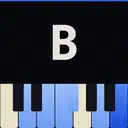
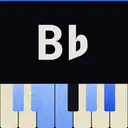
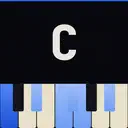
On the piano, the G blues scale starts on a white key and uses mostly white keys, with only the ♭3 (B♭) and the blue note (D♭) on black keys. This makes it one of the more approachable blues scales for keyboard players.
Right hand fingering (ascending): 1 2 3 4 1 2 (1)
Left hand fingering (ascending): 2 1 4 3 2 1 (2)
The C D♭ D cluster places the blue note on a black key between two white keys, making it easy to feel. Practise sliding through this passage smoothly.
G Blues Scale on Guitar
On guitar, the G blues scale is most commonly played at the 3rd fret, using the minor pentatonic box 1 shape with one added blue note. The open G string also makes it useful in open position.
Box 1 (3rd position):
| String | Frets | Notes |
|---|---|---|
| 6th (low E) | 3, 6 | G, B♭ |
| 5th (A) | 3, 4, 5 | C, D♭, D |
| 4th (D) | 3, 5 | F, G |
| 3rd (G) | 3, 4, 5 | B♭, B, C |
| 2nd (B) | 3, 6 | D, F |
| 1st (high E) | 3, 6 | G, B♭ |
The blue note on the 5th string (4th fret) and 3rd string (4th fret) provides two chromatic passing points. Hammer-on or slide into these notes for authentic phrasing.
Use the guitar fretboard view in the Interactive Chord Finder to see all five box positions at once.
How to Use the G Blues Scale
The G blues scale is versatile across many musical contexts:
- G minor progressions: the most natural fit; every scale tone sits comfortably over minor chords
- G major progressions: the clash between the ♭3 (B♭) and the major 3rd (B) is the blues sound
- 12-bar blues in G: one scale handles all three chords (G7, C7, D7)
- Rock and blues-rock: G is one of the most common rock keys on guitar
- Funk and R&B: rhythmic blues-scale riffs over groove-based tracks
12-Bar Blues in G
The standard 12-bar blues progression in G:
| Bar | 1 | 2 | 3 | 4 |
|---|---|---|---|---|
| Line 1 | G7 | G7 | G7 | G7 |
| Line 2 | C7 | C7 | G7 | G7 |
| Line 3 | D7 | C7 | G7 | D7 |
Play the G blues scale over the entire progression. The blue note (D♭) creates tension over the G7 chord and resolves beautifully into the C7 section. The final D7 bar is the turnaround.
Songs That Use the G Blues Scale
G blues runs through decades of popular music:
- “Sweet Home Chicago” by Robert Johnson
- “Hoochie Coochie Man” by Muddy Waters
- “Sunshine of Your Love” by Cream (sections)
- “Whole Lotta Love” by Led Zeppelin
- “Every Breath You Take” (solo) — The Police
- “All Blues” by Miles Davis
- “I Feel Good” by James Brown
These tracks demonstrate how G blues works from delta blues to jazz to funk.
Common Genres
The blues scale is at home across many styles:
- Blues: the genre it helped define
- Rock: the backbone of riffs and solos
- Jazz: essential for dominant 7th and minor soloing
- Funk: driving bass lines and rhythm parts
- R&B and soul: vocal and horn melodies
- Gospel: expressive fills and runs
Practice Tips
Build from the minor pentatonic. If you already know the G minor pentatonic, adding the blue note (D♭) to each box is the fastest route.
Drill the chromatic cluster. The C D♭ D movement is the scale’s heart. Practise it ascending and descending until it feels effortless.
Focus on bending on guitar. Bend the B♭ (3rd fret, 3rd string) up toward B for the classic major/minor tension. Half-step bends are the blues guitarist’s most expressive tool.
Play over a shuffle. Loop a 12-bar shuffle in G and improvise with this scale. Focus on leaving space — the rests between phrases are as important as the notes.
Combine major and minor blues scales. Mix the G minor blues with the G major blues (G A B♭ B D E) for a complete blues vocabulary.
Try It Yourself
Open the Interactive Chord Finder, select G as the root and Minor Blues as the scale. You will see every note highlighted on the piano keyboard or guitar fretboard, with intervals and patterns ready to explore.
For the complete list of scales in every key, see Scales for Piano and Guitar: The Complete Reference Guide.
Practice Chords
Drill chord recognition with a metronome, MIDI support, and score tracking.
Start Practicing