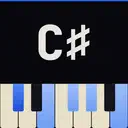
A Minor Pentatonic Scale: Notes, Shapes, and How to Play It
The A minor pentatonic scale is arguably the single most important scale in popular music. It is the first scale most guitarists learn, the foundation of every blues solo, and the go-to framework for improvisation across rock, R&B, funk, and metal. With only five notes and no awkward intervals, it sits comfortably under the fingers on every instrument — yet its expressive range is vast enough to fuel a lifetime of music-making.
Notes of the A Minor Pentatonic Scale
The A minor pentatonic scale contains five notes:
A – C – D – E – G
These are degrees 1, ♭3, 4, 5, and ♭7 of the A natural minor scale. The 2nd and ♭6th degrees (B and F) are removed, eliminating the two half steps that exist in the full minor scale. What remains is a set of five notes with no semitone clashes — every note sounds consonant against the others.
| Degree | Note | Interval from Root | Step to Next |
|---|---|---|---|
| 1 (Root) | A | Unison | Minor 3rd |
| ♭3 | C | Minor 3rd | Whole step |
| 4 | D | Perfect 4th | Whole step |
| 5 | E | Perfect 5th | Minor 3rd |
| ♭7 | G | Minor 7th | Whole step |
| 8 | A | Octave | — |
The interval formula between consecutive notes is m3 – W – W – m3 – W (minor third, whole step, whole step, minor third, whole step). This pattern stays the same in every minor pentatonic scale. For a deeper look at how pentatonic scales are constructed, see Pentatonic Scales for Improvisation.
A Minor Pentatonic on Piano
On the piano, A minor pentatonic uses only white keys — A, C, D, E, and G. This makes it the easiest minor pentatonic scale to visualise and play, just as A natural minor is the simplest full minor scale.
Right hand fingering (ascending): 1 – 2 – 3 – 1 – 2 (thumb on A, index on C, middle on D, thumb crosses under to E, index on G)
Left hand fingering (ascending): 3 – 2 – 1 – 3 – 2 (middle on A, index on C, thumb on D, middle crosses over to E, index on G)
Because the scale has only five notes, the fingering is simpler than a seven-note scale. Focus on smooth thumb crossings and even tone across all five notes.
A Minor Pentatonic on Guitar
A minor pentatonic is the scale most guitarists learn first, and the five pentatonic “box” shapes are the most widely taught fretboard patterns in guitar education. These five interlocking shapes cover the entire neck and connect seamlessly.
Box 1 (5th position — the classic shape):
| String | Frets | Notes |
|---|---|---|
| 6th (E) | 5–8 | A – C |
| 5th (A) | 5–7 | A – C – D |
| 4th (D) | 5–7 | D – E |
| 3rd (G) | 5–7 | G – A |
| 2nd (B) | 5–8 | E – G |
| 1st (E) | 5–8 | A – C |
This is the shape behind countless iconic guitar solos. Start with the root A on the 6th string, 5th fret, and play two notes per string. Once this shape is automatic, learn the remaining four box patterns to unlock the entire fretboard.
Use the guitar fretboard view in the Interactive Chord Finder to see all five positions at once.
Compatible Chords
Because the minor pentatonic contains only five notes with no half-step tensions, it works over a surprisingly wide range of chords and progressions.
Minor-Key Chords
The A minor pentatonic fits naturally over any chord built from the A natural minor scale:
| Chord | Notes | Why it works |
|---|---|---|
| Am | A – C – E | Contains the root, ♭3, and 5 |
| Am7 | A – C – E – G | All four chord tones are in the scale |
| Dm | D – F – A | Root and 5th present; F is avoided |
| Em | E – G – B | Root and ♭3 present |
| C | C – E – G | All three chord tones are in the scale |
| G | G – B – D | Root and 5th present |
Major-Key Blues and Rock
Here is where the minor pentatonic reveals its true power. Playing A minor pentatonic over A major chords creates the classic blues sound. The clash between the C (♭3 of the scale) and the C♯ (major 3rd of the A chord) is not a mistake — it is the defining tension of blues-based music. This technique works across:
- 12-bar blues in A — the standard blues framework
- Rock riffs in A — from AC/DC to Led Zeppelin
- Funk grooves in A — the pentatonic drives the melodic hooks
- R&B vocal runs — bending between ♭3 and natural 3 is the soul sound
Relative Major Pentatonic: C Major Pentatonic
The A minor pentatonic and the C major pentatonic contain exactly the same five notes:
| Scale | Notes |
|---|---|
| A minor pentatonic | A – C – D – E – G |
| C major pentatonic | C – D – E – G – A |
The difference is which note functions as the tonal centre. When you emphasise A, the sound is minor and bluesy. When you emphasise C, the sound is bright and major. Skilled improvisers shift between these two perspectives over the same set of notes to create contrast — landing on C major pentatonic tones during the IV chord of a blues, for example, then dropping back to A minor pentatonic for the I chord.
To find the relative major pentatonic of any minor pentatonic, count up three half steps (a minor third) from the root.
Connection to the Blues Scale
Adding a single note — the ♭5 (E♭) — to the A minor pentatonic transforms it into the A blues scale:
| Scale | Notes |
|---|---|
| A minor pentatonic | A – C – D – E – G |
| A blues scale | A – C – D – E♭ – E – G |
That chromatic movement from E♭ to E (the ♭5 resolving up to the 5th) is the sound of the blues. Most players treat the blues scale as a minor pentatonic with an added passing tone rather than a separate scale to memorise. Once the five pentatonic notes are under your fingers, slipping in the ♭5 is effortless.
Related Scales
The A minor pentatonic belongs to a family of related scales built from the same tonal centre:
| Scale | Notes | Character |
|---|---|---|
| A minor pentatonic | A–C–D–E–G | Bluesy, versatile (you are here) |
| A blues scale | A–C–D–E♭–E–G | Gritty, expressive |
| A natural minor | A–B–C–D–E–F–G | Full minor sound |
| C major pentatonic | C–D–E–G–A | Same notes, major feel |
Songs Using A Minor Pentatonic
A minor pentatonic is one of the most commonly used scales in recorded music. A few well-known examples:
- “Stairway to Heaven” (solo) — Led Zeppelin
- “Back in Black” — AC/DC
- “Comfortably Numb” (solo) — Pink Floyd
- “Sunshine of Your Love” — Cream
- “The Thrill Is Gone” — B.B. King
- “Purple Haze” — Jimi Hendrix
- “Heartbreaker” — Led Zeppelin
Listening to these songs with the scale in mind helps you hear how five notes can generate an enormous variety of melodic ideas through rhythm, phrasing, bending, and dynamics.
Practice Tips
Learn Box 1 first. The first pentatonic box shape at the 5th fret is the most important pattern on guitar. Play it ascending and descending until it is completely automatic before moving to the other four shapes.
Practise bending. String bends are essential to the pentatonic sound. On guitar, bend the ♭3 (C) up toward the major 3rd (C♯), and bend the 4th (D) up to the 5th (E). These are the bends you hear in every blues and rock solo.
Improvise over a backing track. Find a simple blues or rock backing track in A and limit yourself to the five pentatonic notes. Focus on rhythm and phrasing rather than speed — a well-placed rest is worth more than a flurry of notes.
Add the blue note. Once the pentatonic shape is comfortable, introduce E♭ as a passing tone between D and E. Use it sparingly for maximum effect.
Connect the box shapes. After learning all five shapes individually, practise sliding between them. The goal is to see the entire fretboard as one continuous scale rather than five separate boxes.
Try It Yourself
Open the Interactive Chord Finder, select A as the root and Minor Pentatonic as the scale. You will see every note highlighted on the piano keyboard or guitar fretboard, the interval pattern visualised as steps, and compatible chords displayed — ready to play and explore.
For the complete list of scales in every key, see Scales for Piano and Guitar: The Complete Reference Guide.
Practice Chords
Drill chord recognition with a metronome, MIDI support, and score tracking.
Start PracticingRelated Articles
B Minor Pentatonic Scale: Notes, Shapes, and How to Play It
Apr 21, 2026 · 6 min
B♭ Minor Pentatonic Scale: Notes, Shapes, and How to Play It
Apr 21, 2026 · 6 min
C Minor Pentatonic Scale: Notes, Shapes, and How to Play It
Apr 21, 2026 · 6 min