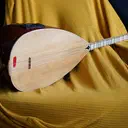
Western musicians tend to think of the pentatonic scale as one thing, the familiar major or minor pentatonic used in blues, rock, and pop. But pentatonic scales exist in virtually every musical culture, and the Japanese tradition offers some of the most hauntingly beautiful variations. Three scales in particular, hirajoshi, iwato and yo, each use just five notes to create sound worlds that are immediately recognisable and utterly distinct from their Western counterparts.
Why Japanese Scales Sound Different
The standard Western pentatonic scales avoid half steps entirely. That is what gives them their smooth, consonant quality: no note clashes with any other. Japanese pentatonic scales take the opposite approach: they include half steps, creating points of tension and colour that give the music its characteristic melancholy and stillness.
The difference comes down to which notes are kept and which are removed from a seven-note parent scale. Where the Western major pentatonic drops the 4th and 7th (the two notes that form half steps), Japanese scales deliberately preserve those half-step relationships while removing other notes.
Hirajoshi: The Most Popular Japanese Scale
The hirajoshi scale is the one most Western musicians encounter first. It appears in film scores, video game soundtracks, and the compositions of guitarists from Marty Friedman to Andy McKee.
| Degree | 1 | 2 | ♭3 | 5 | ♭6 |
|---|---|---|---|---|---|
| A hirajoshi | A | B | C | E | F |
The interval formula is: whole step – half step – major 3rd – half step – major 3rd.
| Step | A→B | B→C | C→E | E→F | F→A |
|---|---|---|---|---|---|
| Size | Whole | Half | Maj. 3rd | Half | Maj. 3rd |
Those two half steps (B–C and E–F) are the emotional core of the scale. They create a gentle dissonance, a sense of longing or incompleteness, that resolves into the wide, open major thirds. The overall effect is wistful and contemplative, which is why hirajoshi appears so often in music meant to evoke Japan, East Asia, or meditative stillness.
Hirajoshi on the keyboard
In A, the hirajoshi uses three white keys (A, B, E) and two that break the expected pattern (C natural instead of C♯, F natural instead of F♯). On a piano, this means the scale sits awkwardly under the fingers compared to standard pentatonics, which is part of what forces you to play it differently and discover new melodic shapes.
Open the Interactive Chord Finder, select A as the root and Hirajoshi as the scale. The keyboard display will highlight all five notes, and the step pattern will show those characteristic half steps clearly.
Iwato: The Dark Mirror
If hirajoshi is contemplative, iwato is ominous. Named after a sacred rock in Japanese mythology, the iwato scale is sometimes called the “Japanese Locrian pentatonic” because of its dark, unsettled quality.
| Degree | 1 | ♭2 | 4 | ♭5 | ♭7 |
|---|---|---|---|---|---|
| B iwato | B | C | E | F | A |
The interval formula is: half step – major 3rd – half step – major 3rd – whole step.
Compare these notes to the A hirajoshi above: A – B – C – E – F. They are the same five pitches. Iwato is actually the second mode of hirajoshi, starting on B instead of A. The relationship between hirajoshi and iwato mirrors the relationship between the major and minor pentatonic scales in Western music: same notes, different emphasis, dramatically different mood.
| Scale | Notes | Character |
|---|---|---|
| A hirajoshi | A – B – C – E – F | Wistful, contemplative |
| B iwato | B – C – E – F – A | Dark, unstable, mysterious |
The ♭2 and ♭5 intervals in iwato are what give it such an uneasy sound. The ♭5 (the tritone above the root) is the most dissonant interval in Western harmony, and starting a pentatonic scale with a half step creates immediate tension. This makes iwato ideal for suspense, horror soundtracks, and any musical context where you want the listener on edge.
Yo: The Bright Japanese Pentatonic
Where hirajoshi and iwato lean toward darkness, the yo scale is bright and grounded. It was historically associated with folk songs, rural music, and the more upbeat side of Japanese musical tradition.
| Degree | 1 | 2 | 4 | 5 | ♭7 |
|---|---|---|---|---|---|
| C yo | C | D | F | G | B♭ |
The interval formula is: whole step – minor 3rd – whole step – minor 3rd – whole step.
Notice something familiar? The yo scale contains no half steps at all, just whole steps and minor thirds, making it structurally identical to the Western minor pentatonic. In fact, C yo (C – D – F – G – B♭) shares the same notes as B♭ major pentatonic (B♭ – C – D – F – G). The theoretical difference lies in which note functions as the tonal centre, but the practical overlap means the yo scale will feel more accessible to Western-trained ears than hirajoshi or iwato.
The yo scale appeared in Japanese folk traditions alongside the shamisen and was associated with secular, everyday music: work songs, festival music and children’s tunes. Its simplicity and brightness made it the scale of the people, in contrast to the more refined court scales.
Comparing All Three Scales
Here are all three scales built on the same root note (A) for direct comparison.
| Scale | Notes in A | Half steps present? | Character |
|---|---|---|---|
| Hirajoshi | A – B – C – E – F | Yes (B–C, E–F) | Melancholy, refined |
| Iwato | A – B♭ – D – E♭ – G | Yes (A–B♭, D–E♭) | Dark, tense |
| Yo | A – B – D – E – G | No | Bright, grounded |
The presence or absence of half steps is the defining factor. Yo avoids them entirely and sounds familiar and safe. Hirajoshi includes two and sounds beautiful but bittersweet. Iwato includes two in the most dissonant positions and sounds unsettling.
Using Japanese Scales in Modern Music
Film and game scoring
Japanese scales are a go-to tool for composers scoring scenes set in East Asia, but they work equally well for any context that calls for stillness, mystery, or otherworldly beauty. The hirajoshi scale over a sustained low drone creates an instant atmosphere that no Western scale can replicate.
Guitar improvisation
Metal and progressive guitarists have embraced hirajoshi for its dramatic intervallic leaps. The two major thirds within the scale create wide jumps on the fretboard that break the stepwise patterns of blues-based playing. Try the hirajoshi over a power chord vamp on the root note. The half steps will clash productively against the fifth in the chord, adding grit and colour.
Ambient and electronic music
The sparse five-note structure of these scales works beautifully with delay, reverb, and atmospheric production. Because there are only five notes, any combination sounds intentional. Arpeggiate the hirajoshi scale through a long delay and you get an evolving texture that never turns muddy.
Composition and songwriting
Use Japanese scales for contrast within a song that is otherwise based on Western harmony. A verse in A minor could shift to A hirajoshi for the bridge: the root stays the same, but the scale swap transforms the mood. The shared notes (A and E) provide continuity while the different notes (C versus C♯, F versus F♯) create the shift.
Playing Tips
Start with a drone. Play or sustain the root note and improvise with the other four notes above it. This anchors the tonality and lets you hear how each interval relates to the tonic.
Emphasise the half steps. The half-step intervals are where the expressive power lives. Bend into them, linger on them, resolve them slowly. In hirajoshi, the movement from F down to E (or B up to C) is the most emotionally charged gesture in the scale.
Use space. Japanese traditional music values silence as much as sound. When improvising with these scales, leave gaps. Let notes ring and decay. A single note followed by silence can say more than a rapid flurry.
Try different root notes. The character of each scale shifts depending on the root. Hirajoshi in E (E – F♯ – G – B – C) has a different physical feel on your instrument than hirajoshi in A. Explore several keys to find the voicings that resonate with you.
Where to Go from Here
Japanese scales are part of the broader world of non-Western pentatonic systems available in the Interactive Chord Finder. If the hirajoshi and iwato appeal to you, try Kumoi (another Japanese pentatonic with a different interval structure), or explore the double harmonic scale for a Middle Eastern counterpart. Comparing these scales to the standard Western pentatonic sharpens your ear for how small interval changes create entirely different musical worlds.
Select Hirajoshi, Iwato, or Yo in the Interactive Chord Finder and listen to each scale played on the keyboard. Then pick up your instrument and start exploring, five notes is all you need.
Practice Chords
Drill chord recognition with a metronome, MIDI support, and score tracking.
Start Practicing